
Looking for the best noodles in Shanghai? The city has so many, in fact, that you could easily plan a noodle crawl within just a few blocks.
This guide rounds up the best bowls and noodle shops in Shanghai, from ¥12 street-cart bowls to ¥360 crab-roe indulgences, featuring time-tested, hole-in-the-wall institutions alongside newer noodle shops in Shanghai worth knowing, covering everything from scallion oil noodles to yellow croaker.
Best Noodles in Shanghai
Read More: Best of Shanghai Eats
Sesame Noodles (麻酱拌面) @ Wei Xiang Zhai

Few dishes are as purely comforting as a bowl of creamy sesame noodles, one of Shanghai’s great staples. The sauce is built primarily from sesame paste, sometimes loosened with a bit of peanut butter (7:3 ratio), then bloomed with hot oil to unlock its nuttiness. Chili oil made from doubanjang gets stirred through for a savory, spicy kick. It’s rich and creamy, and dangerously easy to finish in under five minutes.
There’s only one name that matters here: Wei Xiang Zhai (味香斋), the time-honored noodle shop that’s been perfecting this bowl since 1937, and formerly Michelin Bib Gourmand to boot. It’s the undisputed standard bearer for sesame noodles (¥14) in Shanghai.

The original location on Yandang Road is where it all started, and it’s still standing, even as the brand has expanded with multiple locations across the city. There’s a method to finding a seat here — hover. Wait for someone to vacate theirs and snap it up. Once you’ve found your perch, take your time: these noodles, coated in creamy sesame paste sauce and lightly drizzled with chili oil.
Pro tip: Add a splash of vinegar (the Shanghai way), which also helps to loosen the noodles. FYI: You’ll need to first place your order at the counter. Get a deep-fried pork chop (炸猪排, ¥13) too. Beat the crowd and go during non-peak hours.
Scallion Oil Noodles (葱油拌面) @ Dong Tai Xiang

Scallion oil noodles might be Shanghai’s most iconic dry noodle, and its simplest. Scallions are slow-cooked in oil until deeply caramelized and crisp, infusing the oil with an intense, sweet-savory fragrance. That oil gets combined with light and dark soy sauce mixed with a bit of rock sugar — just a hint of sweetness, a hallmark of most Shanghainese cooking. The Shanghai version also gets a scattering of dried shrimp, bloomed right in the scallion oil. As for noodles, these are typically thin, chewy wheat noodles.
It’s cheap, it’s everywhere, and it’s proof that Shanghai’s best cooking doesn’t need to be complicated.

Dong Tai Xiang (东泰祥) is an institution for this dish — reliable no matter the hour. Another go-to, one that’s great for entertaining visitors, is Jianguo 328 (建国328), which has the character of a homey local restaurant, but with service more attuned to the needs of foreigners (English menu and wine list included). Michelin one-star Shanghainese restarant Ren He Guan (人和馆) also does an excellent version.
Crab Roe Noodles (蟹黄面) @ Cejerdary
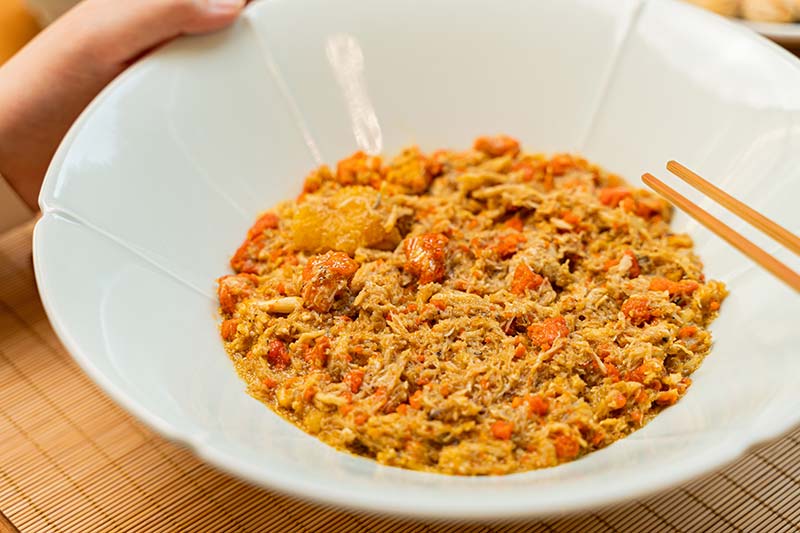
Crab roe noodles are Shanghai’s ultimate luxury bowl, born from the city’s borderline obsession with hairy crab. Demand has grown so intense that you can now find a version of this dish year-round, crab season be damned. A proper bowl is loaded with painstakingly picked crab meat and orange-gold roe, generously topped over noodles.
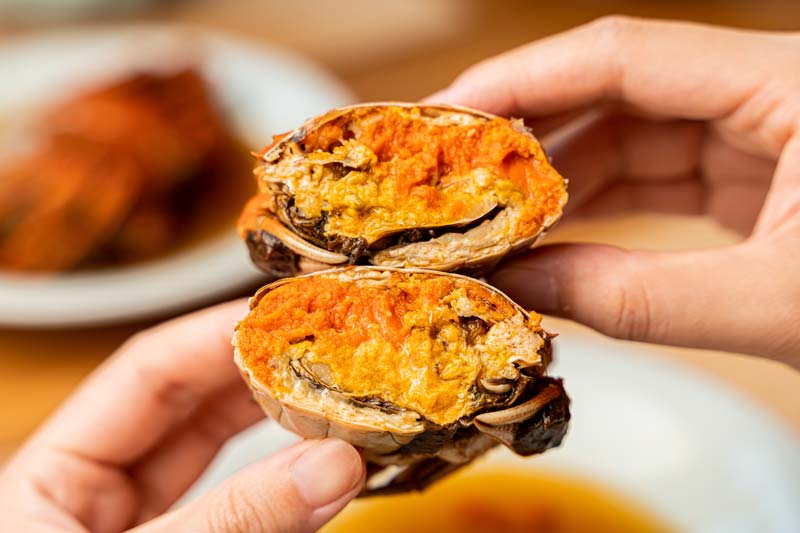
The place to go is Cejerdary (蟹家大院), a specialty hairy crab restaurant established in 2010 that’s since become the gold standard for crab roe noodles in Shanghai. Like other high-volume crab operations, it runs its own crab farms and processing plants by Yangcheng Lake — the source of China’s most prized hairy crabs — to keep quality and pricing in check.
Order the signature Golden Crab Noodles (蟹黄金蟹面, ¥360), made with meat and roe picked from about a dozen crabs, both male and female. It’s pricey, and yes, it’s touristy — but it’s still excellent. Most Shanghainese noodle shops serve some version of crab roe noodles, but Cejerdary is the one to trust when you want the real deal, no compromises.
Yellow Croaker Noodles (黄鱼面) @ Rongjia Noodle (Bib)
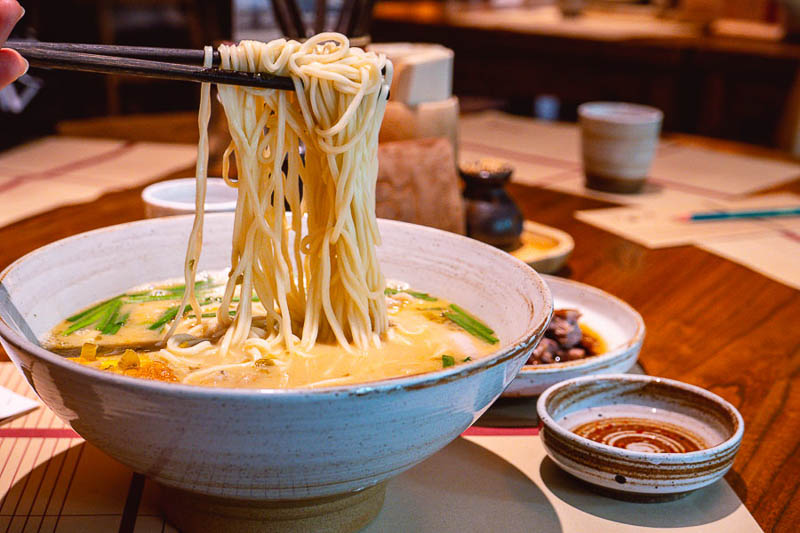
Yellow croaker noodles come in two camps in Shanghai: the classic milky-broth version, made by simmering fish bones until the stock turns creamy and collagen-rich, and a clear-broth style where braised croaker fillets take center stage instead. Either way, the fish matters most — premium croaker, ideally sourced from the East China Sea, has a delicate, slightly sweet flavor and tender, flaky texture that cheaper farmed fish can’t match.
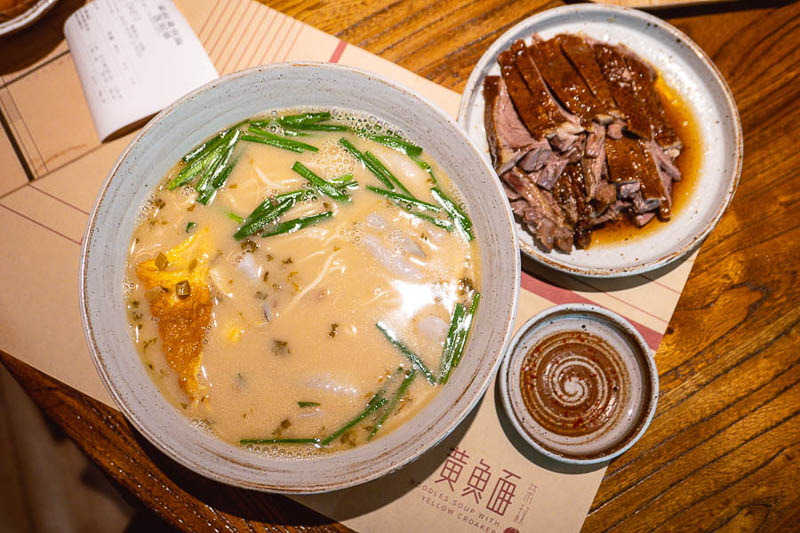
For the milky-broth classic, Rongjia Noodles Soup (荣家黄鱼面) is the standout — a Bib Gourmand holder and sister brand of Xin Rong Ji (新荣记), the one-Michelin-starred Taizhou restaurant that supplies its premium croaker. The broth here is simmered until creamy, topped with deboned fillet and springy wheat noodles (¥138, and worth it).

For something scrappier and open 24/7, Ding Te Le (顶特勒粥面馆), tucked down an alley off Huaihai Zhong Lu (look for the ICBC Bank), serves a milky stock loaded with preserved mustard greens and flaky fried croaker — order it hot, let it cool slightly, and watch the noodles swell up with flavor; it used to hold a Bib Gourmand as well.

For the clear-broth, braised version, Yu Du Lao Wei (渔都老味面) is the move, also a Bib Gourmand pick: the owner hails from Zhoushan, a seafood-rich city in Zhejiang, and the croaker fillets here are noticeably larger and braised rather than milky-stocked.
Yangchun Noodles (阳春面) @ Yi Gui He
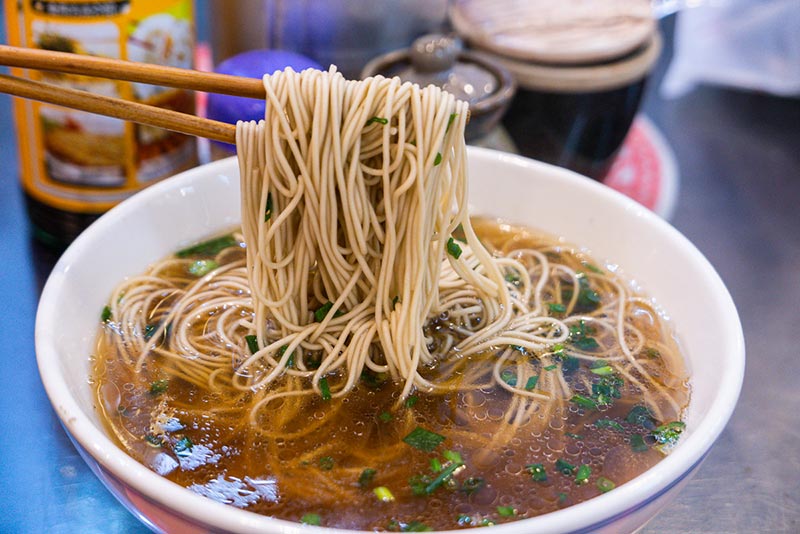
Yangchun noodles are Shanghai’s most basic bowl — the noodle equivalent of a blank canvas. They’re everywhere, which is exactly the point. A proper bowl comes down to a light broth (usually pork bone-based), a spoonful of lard for richness, soy sauce, chopped scallion tops, and thin, toothsome wheat noodles. Simple, but exacting, and there’s nowhere for a bad noodle or a lazy broth to hide.
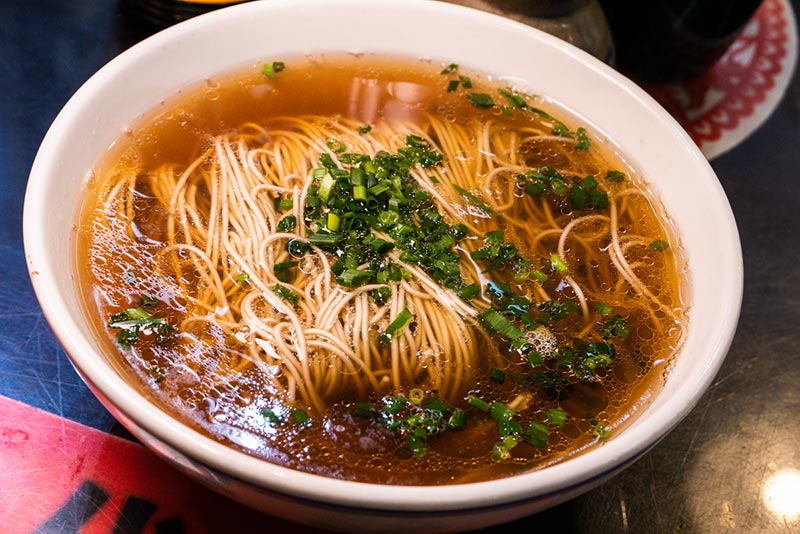
For a specialty take, go to Yi Gui He Noodle Shop (逸桂禾面馆) in the Old Town — an underrated spot locals have a bit of a love-hate relationship with, since it costs more than the average noodle shop at a whopping ¥29 a bowl. That’s because everything, from the noodles to the aged soy sauce, is made in-house, and you can taste it. Their Yangchun Noodles are springy and thin, served in a clear, minimally seasoned broth that lets the noodle texture do the talking.
The shop also sells raw noodles and their own aged soy sauce, if you want to take a bit of Shanghai home with you.
Jiaotou Noodles (浇头面) @ San Lin Tang
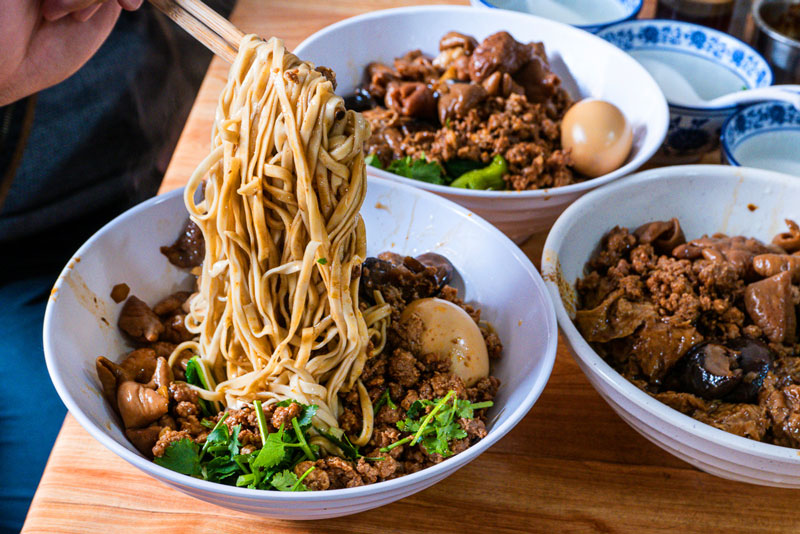
Jiaotou mian, literally “topped noodles,” is less a single dish than a noodle philosophy: fresh noodles customized, dry or soupy, with whatever toppings catch your eye off a menu up on the wall. It’s the answer to build-your-own, executed with decades of muscle memory behind it. Jiaotou noodles can be found across China.
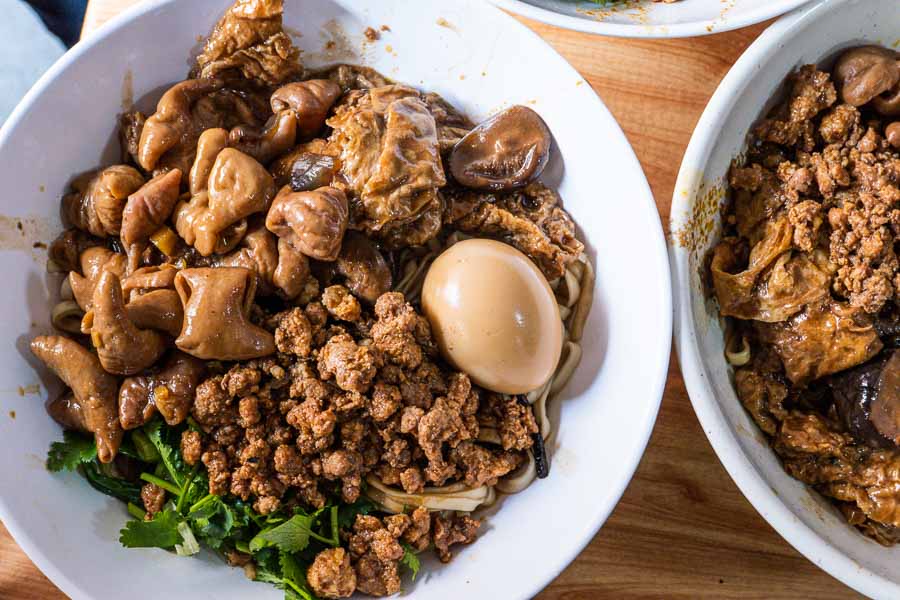
For the real deal, head to San Lin Tang (三林塘馄饨店), a noodle and dumpling shop that’s been slinging bowls since 1981 — before the Oriental Pearl Tower even existed. It’s since relocated to Hengshui Lu in Hongkou, trading old-Shanghai grit for air-conditioning and more seats, though the original staff and recipes remain intact; it’s become something of a local legend, featured repeatedly on TV segments about Shanghai’s food culture.
Order Xiao Ye’s “The Usual” (¥52) — named after a regular’s order — a towering bowl loaded with minced pork, braised intestines (skip if you’re not a fan), kaofu, egg, soy-braised mushrooms, and two dumplings. It’s basically noodles with everything. It comes with a light, white pepper-seasoned soup on the side. I’m partial to the braised intestines here, expertly mellowed into something fragrant rather than funky.
Braised Intestine Noodles (大肠面) @ Da Chang Mian

Braised intestine noodles are for those with an affinity for “spare parts” — noodles topped with pork large intestine, ones that have been scrubbed until chalk white, then slow-cooked until tender before landing on a bowl of gummy noodles. The flavor is as intense as you’d imagine: offally, funky, not for the faint of heart. People either love it or hate it in Shanghai, and there’s rarely a middle ground.

Da Chang Mian is the pinnacle here, and has been for over 30 years — it used to be a proper hole-in-the-wall but recently moved into a bigger, cleaner space with air-conditioning. Of all the braised intestine shops in the city, this is the most popular, drawing lines out the door and plenty of accolades for how clean-tasting the bowl of noodles are.
Get it dry or with soup, or go for the loaded version with fried shredded pork, braised kaofu, and black fungus mushroom, and pickled mustard greens (美味大场面, ¥36). Get there before 11am to guarantee a seat, and note that it closes during the worst of the summer heat, like most of Shanghai’s smaller noodle shops.
Shanghai-Style Cold Noodles (冷面) @ Yi Gui He
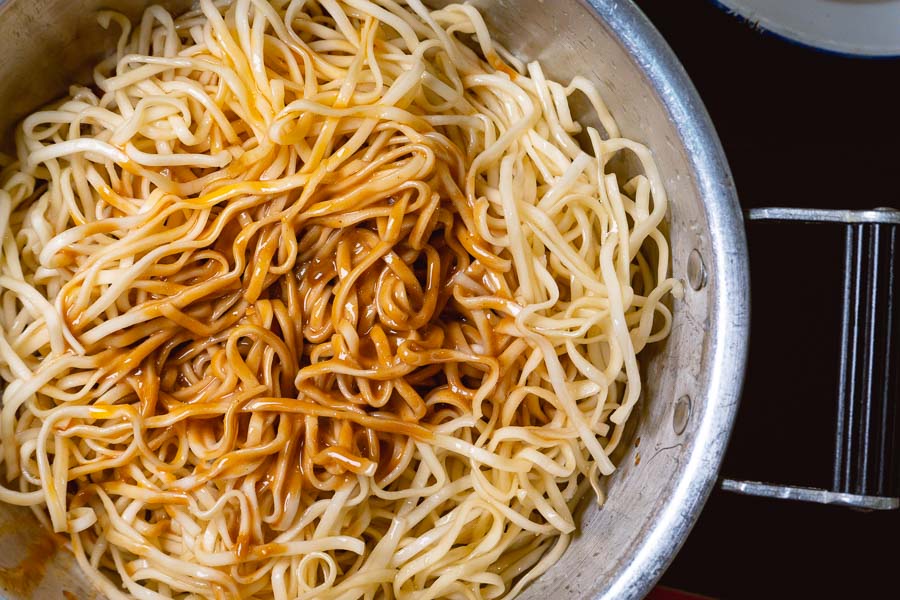
Shanghai-style cold noodles are wheat noodles cooked to a firm bite, traditionally dressed in a light sesame sauce and shredded cucumber — though some shops swap in a sesame-peanut blend. A splash of soy sauce, vinegar, or chili oil is common, and toppings range from shredded vegetables to minced meat to kaofu. It’s Shanghai’s answer to summer heat: no broth, no fuss, maximum refreshment.
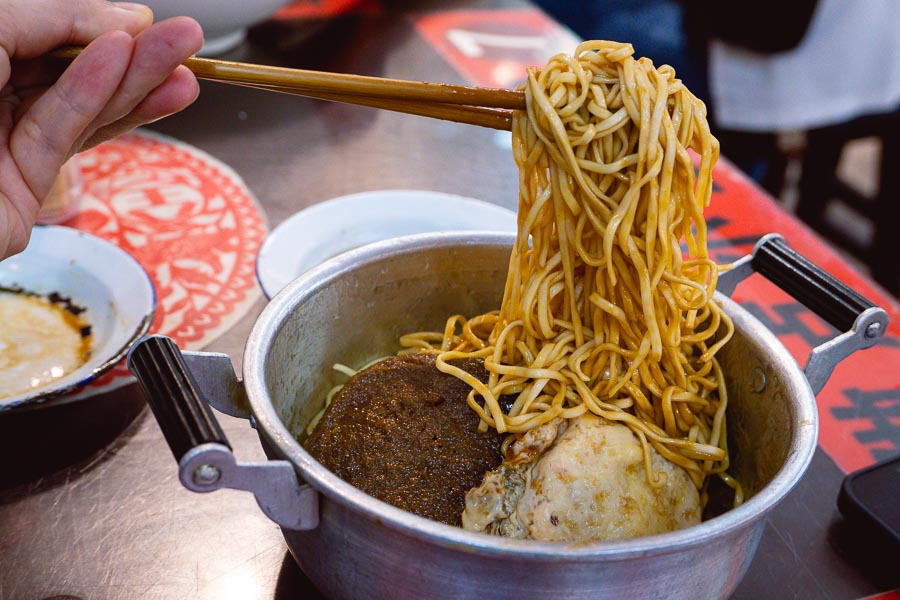
Yi Gui He (逸桂禾面馆) is one of the better versions in the city, though it’s pricier than most at ¥29 a bowl — justified by the fact that they make their own noodles and aged soy sauce in-house for the peanut-based sauce, and you can taste the difference. Add seitan (gluten patty) or a fried egg (¥7 each), both drenched in soy sauce, for good measure.

Dong Tai Xiang (东泰祥) does a more basic, no-frills version alongside all its other Shanghai snacks. Honestly, though, you’ll find these sold at little stalls all around the city come summer, scooped straight into takeaway paper bowls.
Spicy Bullfrog Noodles (牛蛙面) @ Haling Noodles

Bullfrog noodles are a saucier, spicier corner of Shanghai’s noodle scene — thick noodles in a broth so reduced it’s closer to a sauce, tinted golden from cooking with rapeseed oil, and given a sour-spicy kick from a heavy hand of bright green chilies and preserved mustard greens.
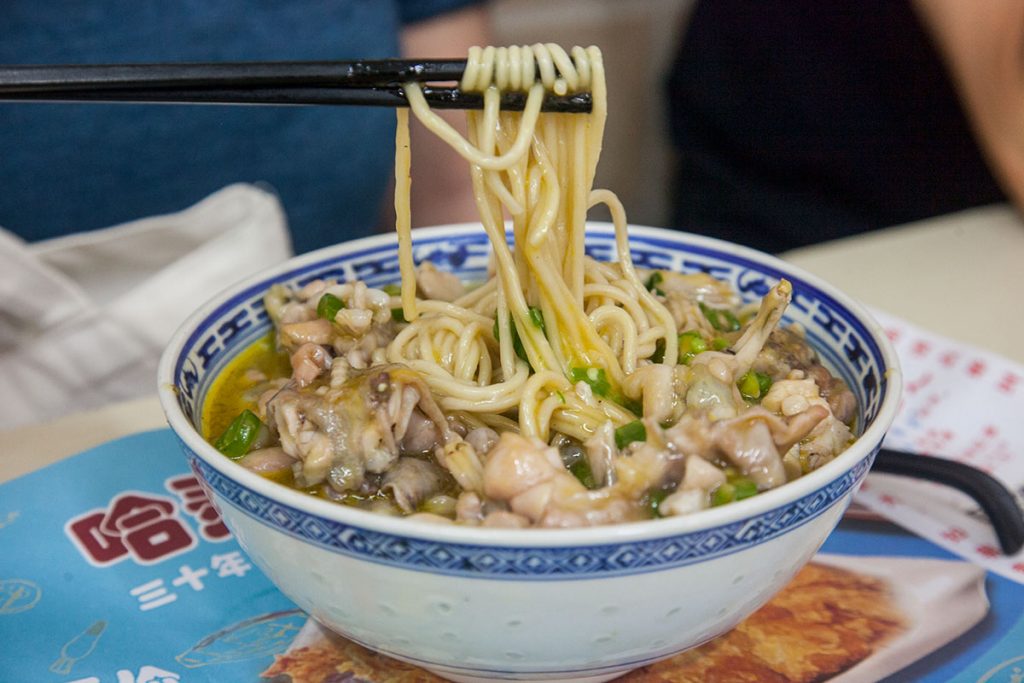
Haling Noodles (哈灵面馆), a chain that’s been around since 1987, is the name most associated with it. The spicy bullfrog noodles are loaded with about two to three bullfrogs’ worth of springy meat — a saucy, generous order that more than justifies the price (¥29/regular, ¥39/large). The same bullfrog also comes served over rice, if noodles aren’t your thing. Other menu highlights include braised intestines and fried pork liver. Plenty of locations scattered across Shanghai.
Note: it’s not typically known as a Shanghai style of noodle, but it’s popularity from Haling’s perfection of spicy bullfrog noodles justifies its spot on this list.
Chaomian / Chow Mein (Street Noodles)
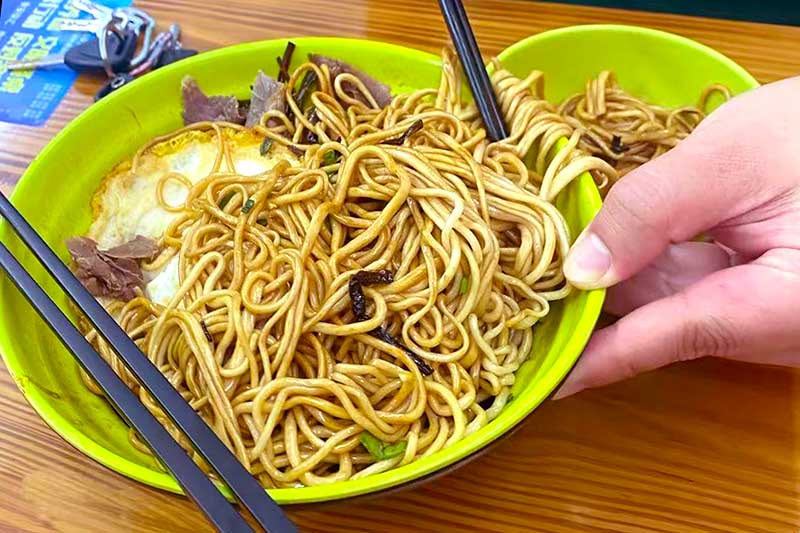
Let’s address the “chow mein” of it all: chaomian (炒面), as most of the world knows it, doesn’t really exist in China — it’s simply the term for stir-fried noodles, and it varies wildly by province. (The only reason it’s on this list is because Taste Atlas apparently ranked it among the best noodles in the world, ‘Murica and all, so, fine, here we are.)
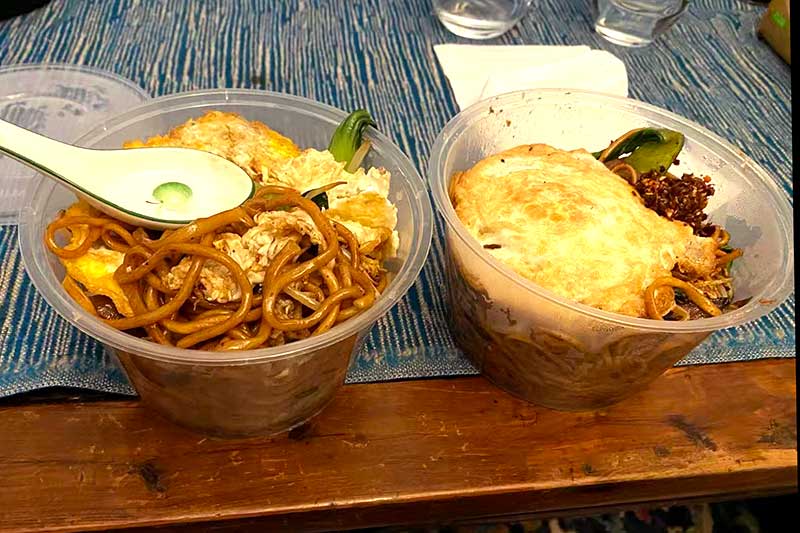
The closest, most honest equivalent in Shanghai is street cart noodles — noodles stir-fried fast and hot in a wok. You can build your own, adding egg, sunny side up egg, pickled mustard greens, a myriad of questionable sausages and meats, and baby bok choy. A word to the wise, always ask for mildly spicy (微辣) unless you want to challenge your body.
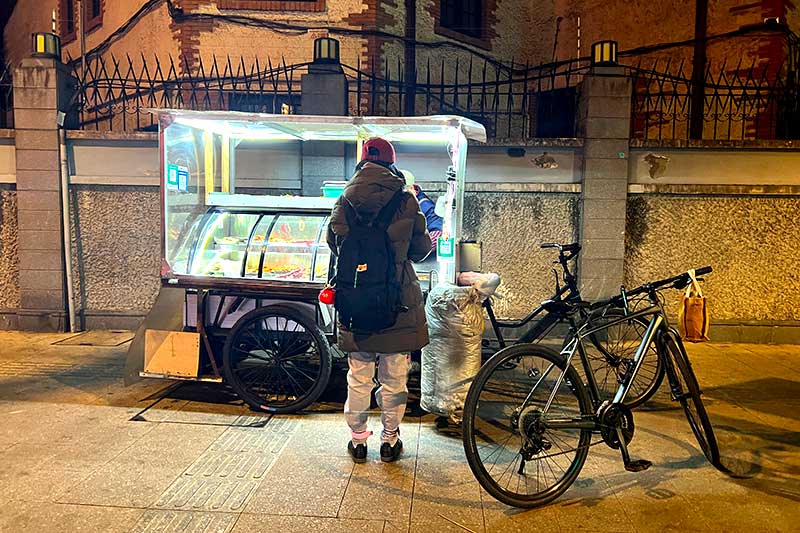
You’ll find chaomian carts hanging around only after dark. It’s a common supper staple people chase down late, usually parked near university gates and in proximity to nightlife hubs.
A few reliable spots around town: Chongqing South Road x Jianguo West Road (by MAO Livehouse), Yuyuan Road x Zhenning Road, and Kangding Road x Shaanxi North Road. There’s also 正阳牛肉面 at 380 Jianguo West Road, open until at least 2am, where they fry up noodles using freshly pulled, handmade dough. It won’t be fancy, and it’s not meant to be. A basic bowl (noodles, vegetables, egg) is usually ¥12-14.
Wuxi-Style Noodles (无锡面) @ Jing Mei Wuxi

Wuxi cuisine tends to run sweeter than Shanghainese food — yes, sweeter — and its noodles are no exception. The signature format pairs taut wheat noodles with soy sauce and scallion oil, not dissimilar to Shanghai’s way of doing things, then loads them up with a rich, usually pork-based topping that’s simmered until fall-apart tender.

Jing Mei Wuxi Noodle Shop (井梅无锡面馆·私房面) is the name to know, one of the latest additions to the Michelin Guide (2023). The first original location on Yanping Lu — a strip in Jing’an better known for bars than noodle shops — is what caught the Guide’s attention, and the brand has since expanded with multiple locations.

Order the signature Wuxi Braised Pork Rib Noodles (无锡酱排骨葱油面, ¥42): ribs marinated in a bright red fermented soy paste, tender enough to fall off the bone and only lightly sweet, served dry with a dark, herbal broth on the side that tastes far lighter than it looks.
For something spicier, the chili and soy-braised pork bone noodles (香辣牛骨葱油拌面, ¥45) bring a peppery, star anise-forward kick.
Dan Dan Noodles (担担面) @ TAN Sichuan Cuisine

If you don’t have time to make it to Sichuan, or find yourself in Shanghai craving something from that end of the country, dan dan noodles are the dish to chase. It’s springy noodles bathed in a sauce made with sesame paste, chili oil, soy sauce, dark Chinese vinegar, and a touch of sugar, sometimes topped with a little bit of minced pork.
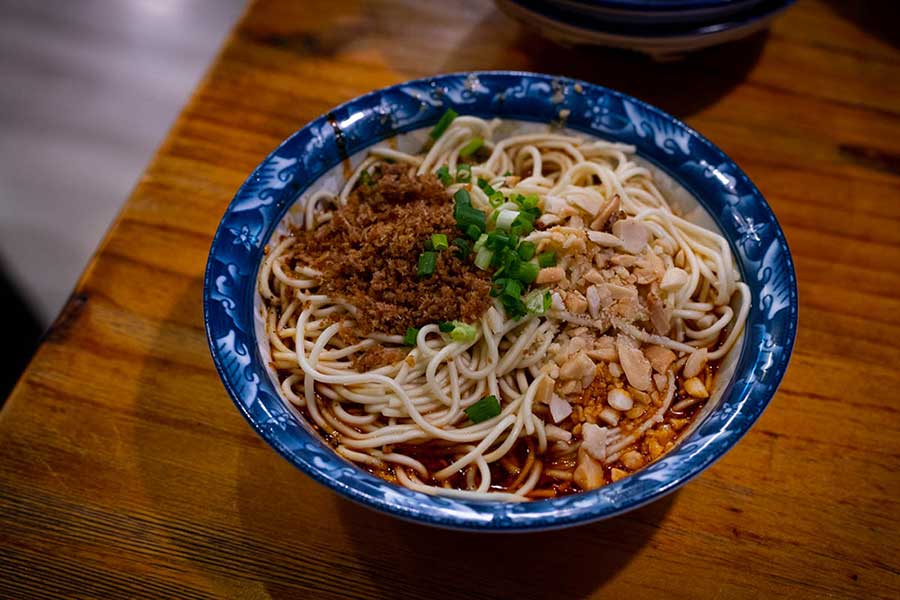
TAN Sichuan Cuisine (坛) does a solid version (¥18), but if you’re trying to avoid the Yu Garden crowds, Liu Tang Men (六樘门) is the better call (¥22)— a mainstay for Sichuan noodles with a cozy, recently renovated dining room.
Tianshui Noodles (甜水面) @ Liu Tang Men

Tianshui mian — literally “sweet water noodles” — is Sichuan’s lesser-known export, and arguably its most fun: a small bowl of chunky, chewy noodles tossed in sweetened soy sauce, chili oil, and crushed peanuts. It’s sweet-savory rather than straight-up spicy, more snack than meal, and usually served in portions small enough that you’ll want to order something alongside it.
Find it at Liu Tang Men (六樘门) for ¥16, the same Sichuan noodle mainstay that does a reliable dan dan mian — it’s their calling card, and worth ordering as a starter before the spicier stuff arrives.


2 comments
Wowza. Thanks for this exhaustive noodle guide. Looking forward to trying a few out later this year.
Used to think of myself as a ride or die rice gal, but have come to realise that it’s maybe unnecessary to pledge allegiance to one refined carb over another. Just need to make up for lost time!
Really enjoyed 明呈黄鱼 the last time I was in Shanghai. Owner was dependably crotchety and signage was hilarious. Highlights were the MSG free yellow croaker noodles, wontons and giant spring rolls. Didn’t try, but they also do the eels and the offal.
Hi Judy! You’re most welcome! Have to check out 明呈! heard from others too that it’s pretty yum.
*I love noodles, but I’m still a ride or die rice gal too*