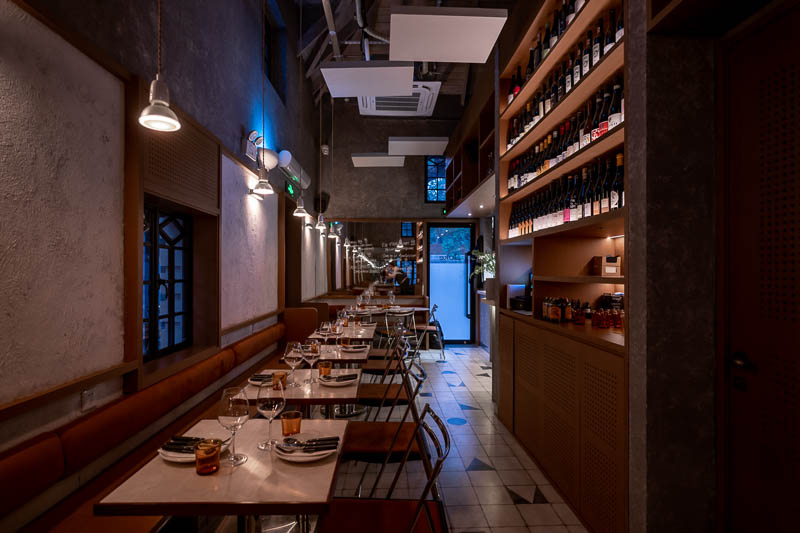
On September 30, Juke celebrated five years with three solid rounds of dinner, tons of champagne, and a room of regulars.
In a city where most restaurants hope to make it past year three, five is a feat.
Juke, an intimate 18-seater on Dongping Lu, was one of Shanghai’s first neo-bistros. This is a story of resilience, relevance, and a chef-driven menu, with some new dishes to show for it.

The Origins of Juke
During COVID, before Shanghai’s lockdown, travel was a hassle and the future uncertain. But in Hong Kong, Juke’s soon-to-be chef-partner Michael Janczewski was planning his comeback.

He had been at Belon, the Michelin-starred restaurant that ranked No. 4 on Asia’s 50 Best in 2020. Before that, Canton Disco at The Shanghai EDITION – from the same group behind Hong Kong’s legendary Ho Lee Fook, where he had also worked.
Juke opened in September 2021, his first independent project.
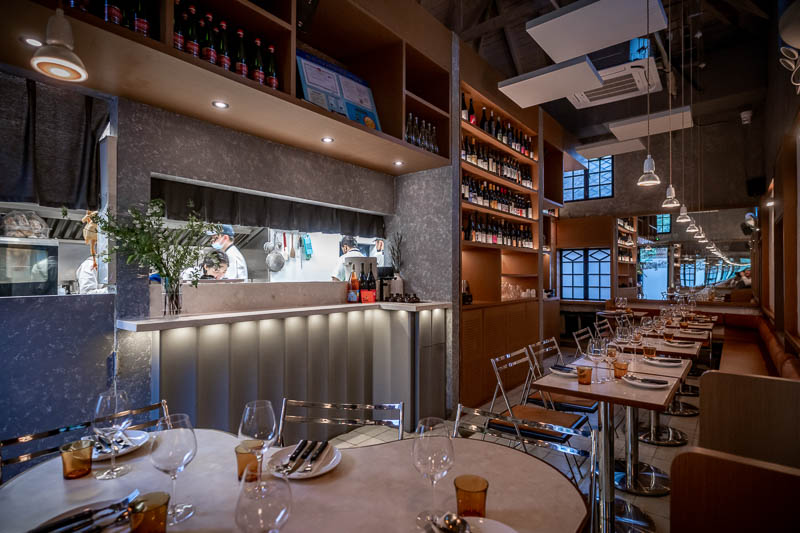
No one knew when travel would normalize. “We kind of missed this kind of experience, this kind of food,” says Michael. “We wanted to open a place that would bring it home.”
He believes Juke was among the first of its kind. “A little more intimate, a little more upscale bistro food. A neo-bistro, which was still quite unique to the Shanghai scene at the time.”
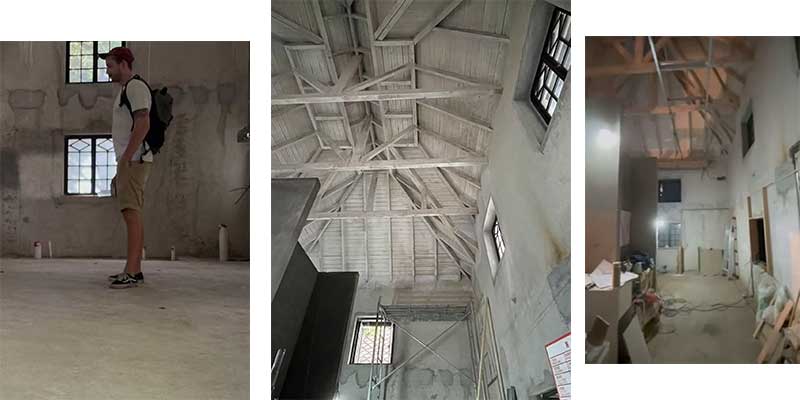
What is a Neo-Bistro?
But what exactly is a neo-bistro? Defining the genre takes Michael a moment.
“Shanghai bistros are not bistros. They’re more like restaurants.”
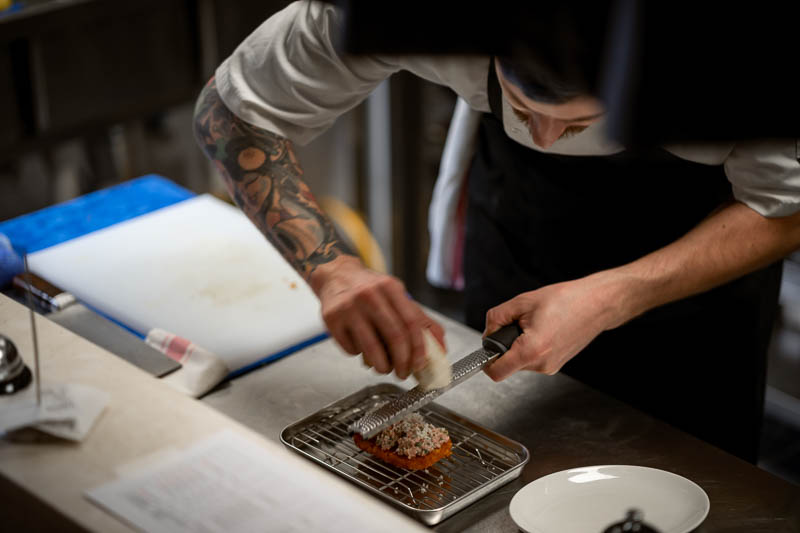
A true bistro keeps a short menu that can change daily. The Paris bistros that inspired Juke run fewer than a dozen dishes. For Michael, the genre is less about size than style of service and plating: clean-looking plates, done well.
Michael likens it to a fine dining degustation menu, except here, you get to choose which dishes you want to order. There’s no fluff in between. “You have sort of a Michelin-star standard in the kitchen, but done in a more casual, more accessible way.”
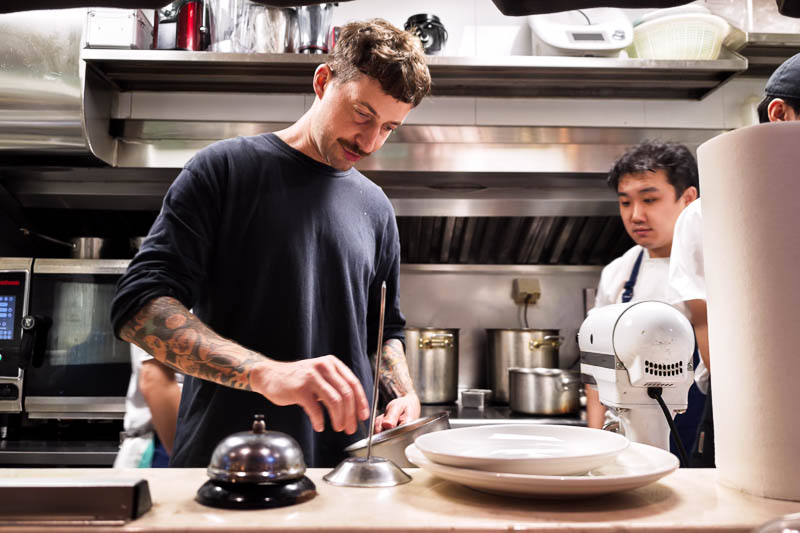
The food rests on French and Italian foundations, with local ingredients wherever possible, from bamboo prawns to Huzhou pigeon. w find their way in naturally.
“It’s just borderless, playing with nice-quality ingredients that work together,” he says.
The Good Times
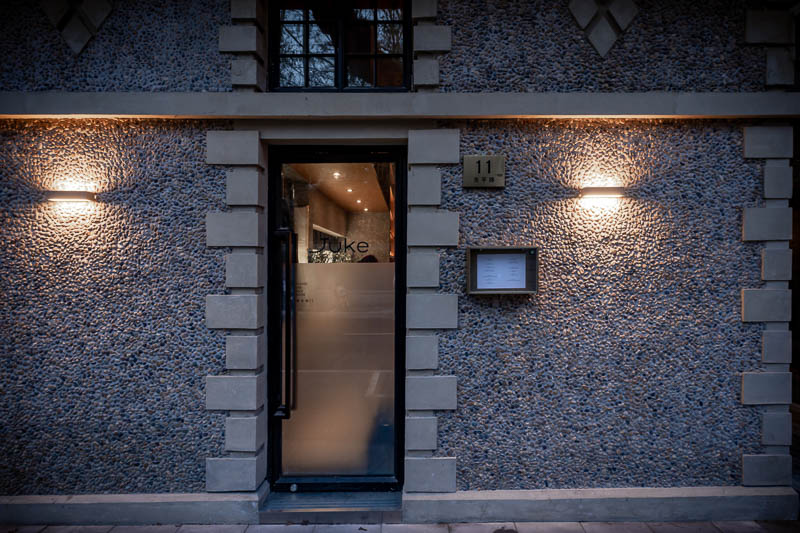
Juke became one of the hottest tables in town.
“We got a really nice following and a good wave of regulars,” Michael says, recalling the first month.
For a long time, it was booked weeks in advance and the room was full every night.
Then lockdown hit. Plain and simple, it was a hard time. Juke kept everyone on the same payroll and kept paying rent. “That’s just the risk you take when you open something like this during special times,” he says.
Still, Michael finds a fond memory in that difficult stretch. Once the lockdown lifted, restaurants couldn’t yet open for dine-in, and Juke’s food doesn’t travel well, so they improvised, selling flatbreads and Turkish-style skewers through the restaurant’s window. A line formed down the street. People sat on the curb with wine and food.
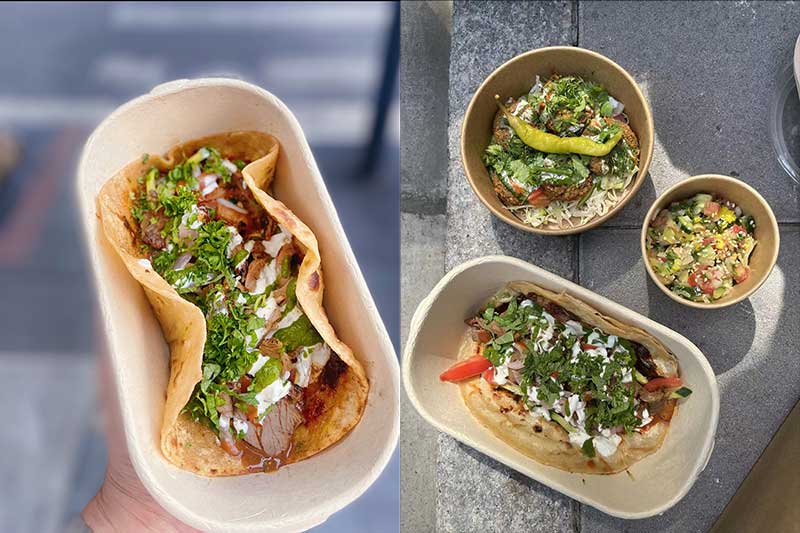
“Everyone really needed an atmosphere, a vibe, a bit more closeness to other people. I think that’s what we did here as a team, and it was pretty awesome.”
There were many highs over the years. Collaboration dinners with like-minded chefs Dan Li of Yaya’s and Jeremy of Bizy Boy are among the few times they pushed the capacity of their tiny kitchen, just for the fun of it.
The high point? He doesn’t hesitate.
“Being open for five years. That’s definitely one.”

The only real speed bump came about a year after lockdown, when reservations slipped for about four months.
Michael’s explanation is candid: Juke was booked out so often that people gave up calling. By the time tables opened up, no one knew.
The fix was straightforward. Juke started posting on social media, and two months later, bookings were back.
“We’re (now) not always rammed, but we are also not slow. We can maintain the quality and always have space for someone to walk in,” he says. And he prefers it that way.
This also reflected the times. In a city where people can literally go to a new restaurant every day, a quiet restaurant can become an invisible one.
How The Scene Changed
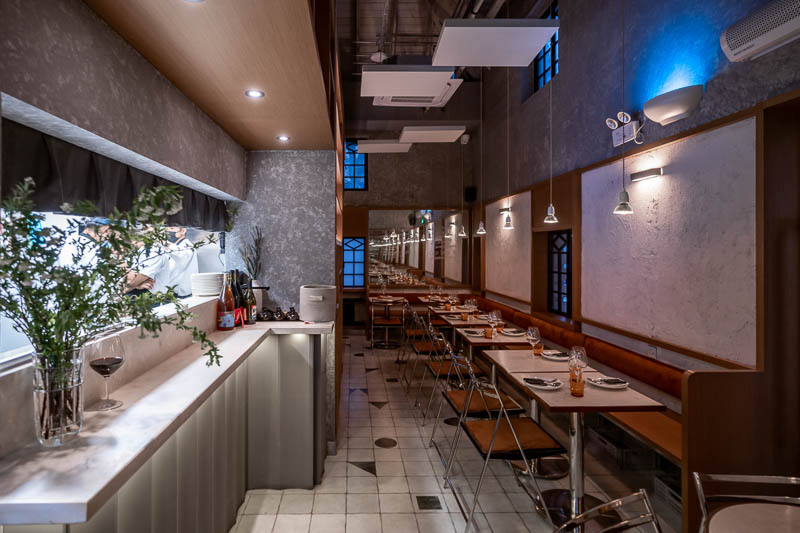
From 2023, Shanghai saw an explosion of bistros, and not all of them were the real deal.
“The same joints were changing their names to have ‘bistro’ in them and changing their descriptions on Dianping,” says Michael.
And I concur.
What spread was a look as much as a format: dark, moody rooms with mirrored walls, hanging bulbs, copper and gold accents, wood, short menus with a bit of an Asian/Chinese twist, and wine in a supporting role.
Social media helped, because these places photograph well.
Diners were tired of big, formal restaurants, and the best of the new bistros let the chef lead. The downside is sameness. Not every kitchen has a pro chef at the helm, and the oversupply of mediocre bistros makes a lot of noise.
These days, people also tend to drink less – healthy living is trending big time, and many opt for just one glass instead of a bottle.
What It Takes To Last
Longevity, I’d argue, comes down to three things.
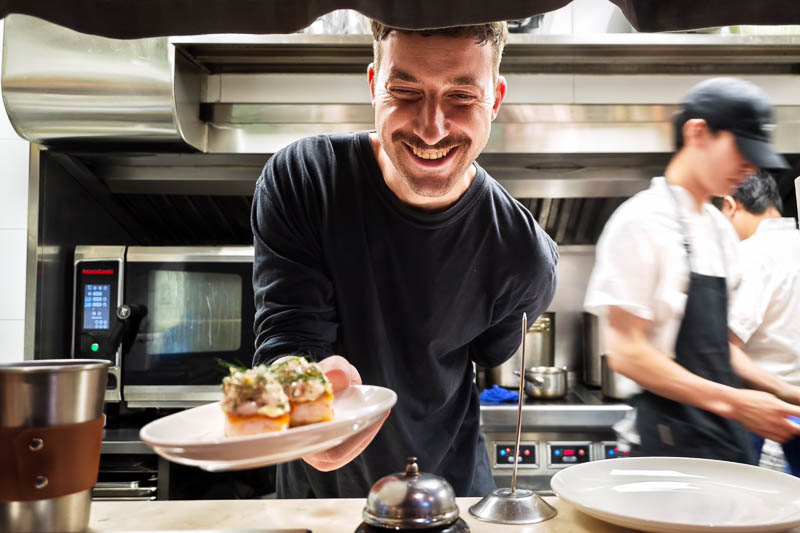
The chef: Michael knows how to make food work, and that’s what people come back for.
The size: eighteen seats are far easier to fill than seventy.
And the one Shanghai makes hardest: staying interesting. Loyalty is hard to come by here, and a restaurant that stops being new risks being forgotten.
That’s where Michael’s talent plays to Juke’s strengths. The menu changes frequently, though one dish at a time, and older dishes come back in new forms.

The calamari that I wrote about in 2022 (tomato, butter, and sake, see above) disappeared for a long time.
It returned with a new sauce built from a fermented kimchi reduction and butter, with the dried kimchi ground into a powder.
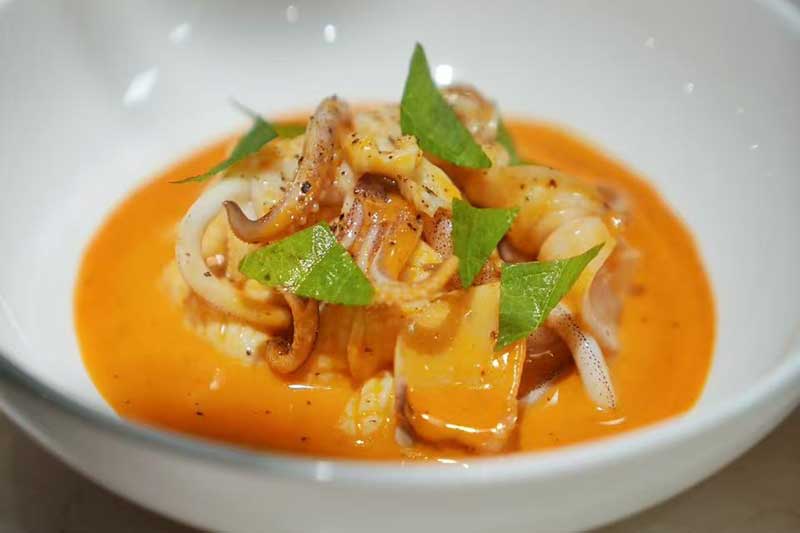
“It tasted like instant noodles, like Shin Ramen,” Michael says. When I joked that he’d made his own MSG, we had a good laugh.
The foie gras torchon was pulled, then returned when guests kept asking. Now, it’s considered a signature, made with yellow wine jelly, mushrooms, and raisins.

The rice pudding has gone through its own evolution. The first version used koji, raisins soaked in Shaoxing wine, and caramelized white chocolate.
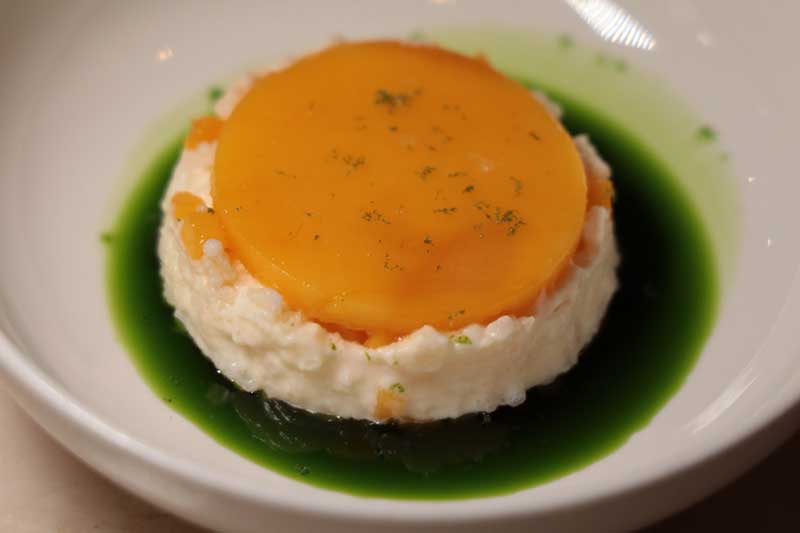
The current one (pictured above), which has been on the menu for a long while, is cooked in coconut milk and folded with Brillat-Savarin, a rich triple-cream cheese.
“It’s a cross between rice pudding and cheesecake,” says Michael.
New Dishes
As for new dishes:
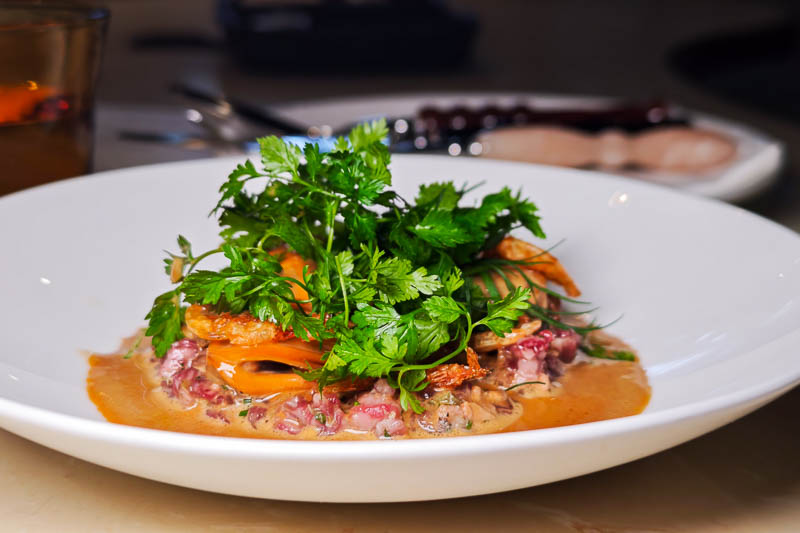
Beef tartare with mussels is Juke’s first surf and turf, and the first time beef tartare has landed on the mains. Australian M3 tenderloin is seasoned the classic way and mixed with mussels steamed in sake.
A warm bouillabaisse beurre blanc made from prawn shells, mussel juice, and saffron goes over the top. It takes the chill off the beef and adds a sea-forward umami that makes a classic tartare far more interesting. The mussels are pillowy and flavor-soaked.
As I take my first bite, Michael says, “Honestly, wagyu tartares are disgusting. No one should do this. You’re just biting into cold fat.”
Spoon halfway to my mouth, I find myself agreeing while trying to remember whether I’d actually enjoyed one before.
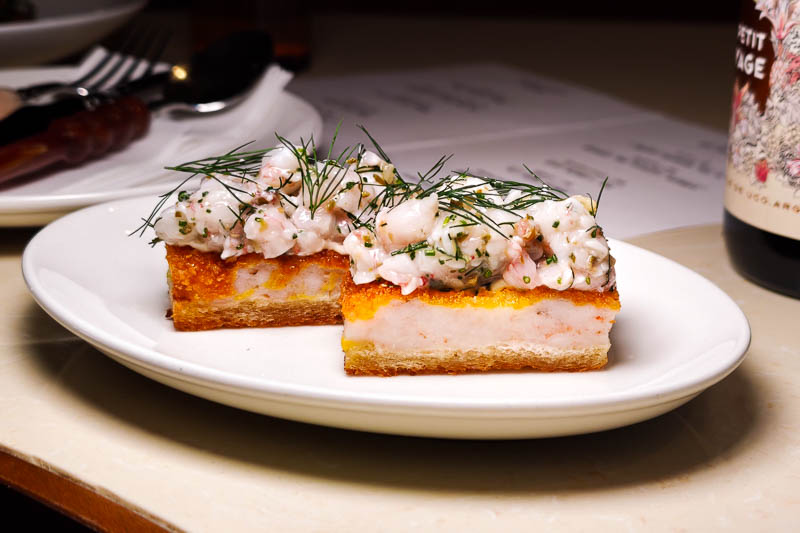
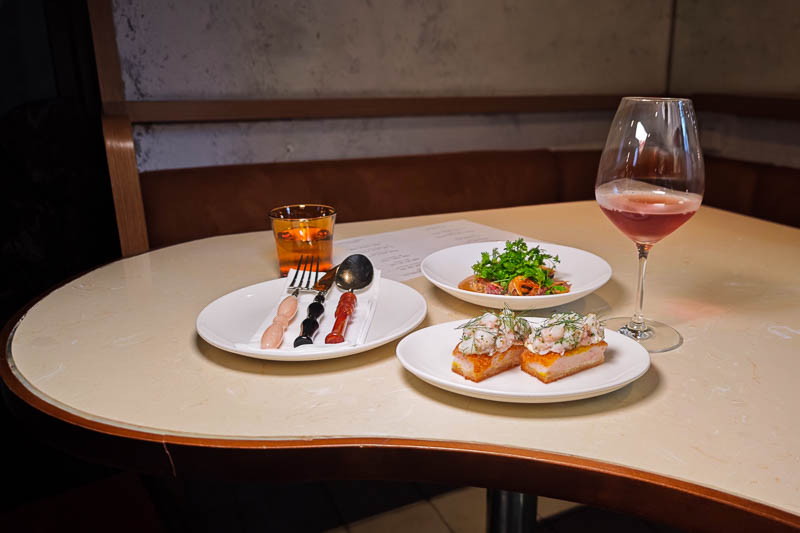
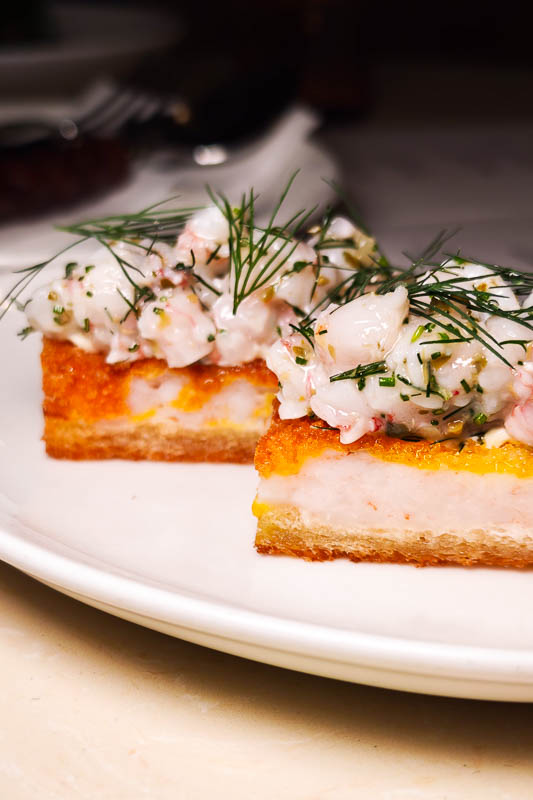
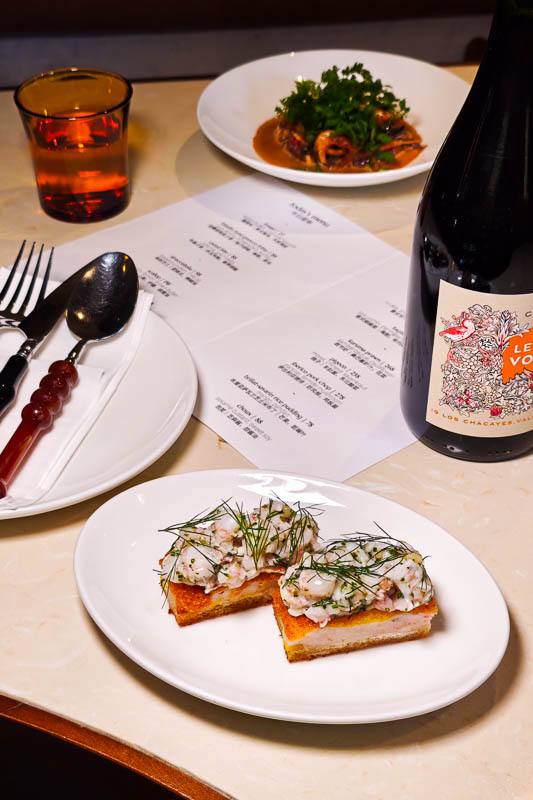
Next, a prawn gravlax toast. On top is sweet shrimp cured like salmon gravlax – dill, lemon, capers and a splash of gin. Warm, crunchy bread against soft, sweet shrimp, with enough acidity to cut through.
Prawn toast is one of Michael’s obsessions. He’s made so many versions over the years, he jokes he could write a book about them.
The Wine: Acre Project
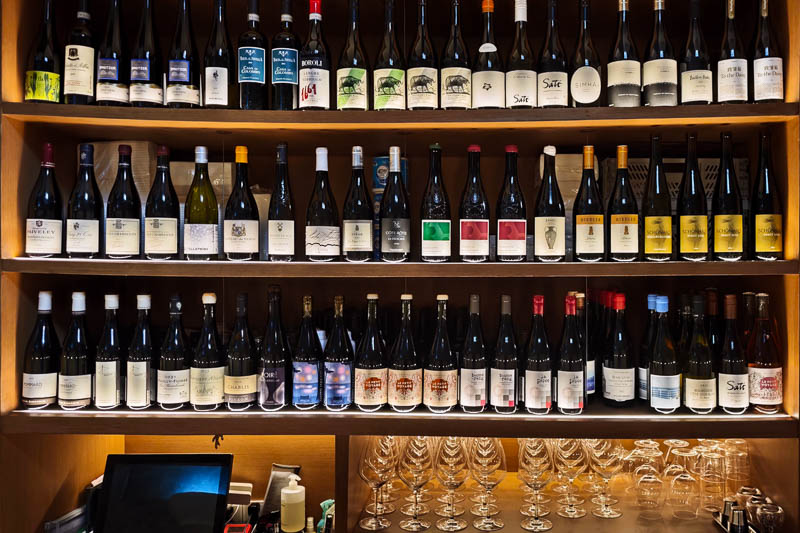
The same attention carries through to the wine list. Dubbed the Acre Project, Juke’s concise list focuses on small producers, curated by partner and wine supplier Mathieu Le Pape.
“Small producers work in a more precise, hands-on way, where every decision in the vineyard directly shapes the character of the wine,” says Mathieu. Rather than chasing big names or volume, the aim has always been to build a list with identity and consistency, something that hasn’t changed since day one.
To showcase new discoveries, Juke features a Winery of the Month. October’s spotlight is on Les Bottes Rouges from the Jura, a producer with very limited allocations in China. Burgundy remains popular, though the team is just as happy steering guests toward lesser-known bottles.
Glasses start at ¥80 and bottles at ¥430.
The Last Word
Being past the hype doesn’t mean being past interesting.
With more than half its menu turning over every year, Juke can feel like a new restaurant each visit. The same goes for any good place that’s more than a few years old: if you had a good meal there, why not go back?
I asked Michael what’s next for Juke. His answer says as much about the city as the restaurant.
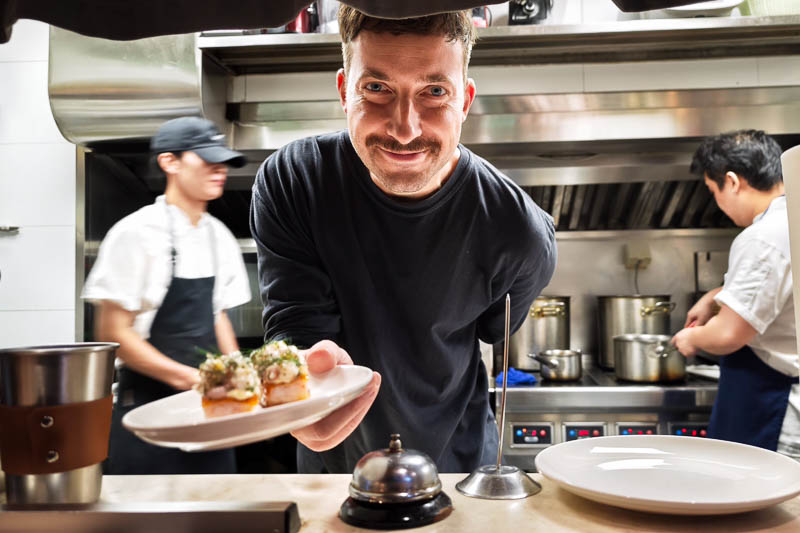
“We keep on going. And we obviously always try to improve. What’s next for Juke is really what’s next for Shanghai. To some degree you always have to adapt, because Shanghai is a crazy place where restaurants are opening and concepts are catching up with trends very fast.
Even the neo-bistro, there are more and more, and better and better ones. The chefs here have more and more experience, and a lot of chefs are coming from abroad, and are showcasing something they always wanted to but maybe couldn’t before. I think a lot of them are definitely very interesting.
So all we can do here is stay relevant, keep growing, and keep working on new techniques, our menus, and ourselves.” – Michael J.
Book Now
Nomfluence Readers Deal: One complimentary dessert per table.
Additional photo credits, provided by the venue: Food photos by SYD, interiors by Graeme Kennedy.