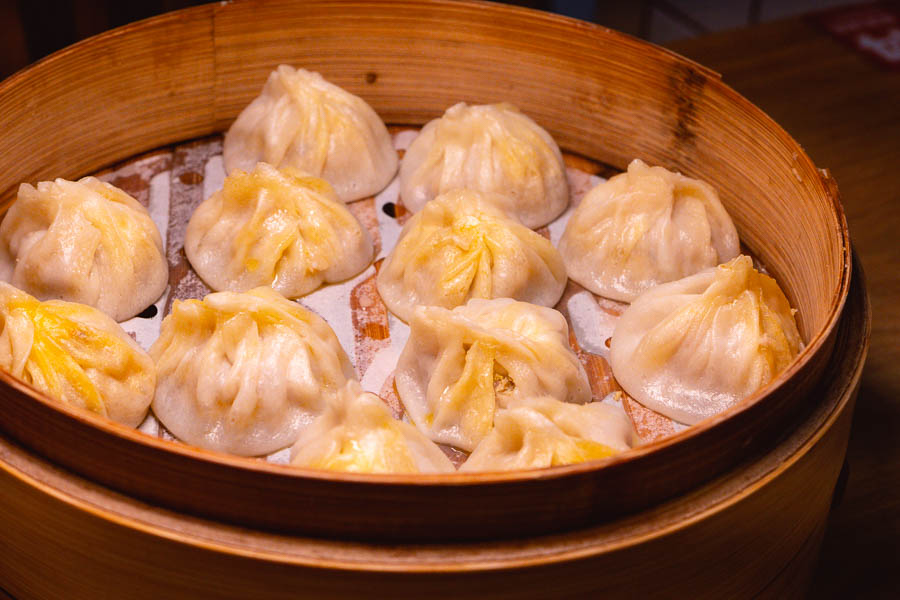
So you want to know what to eat in Shanghai. Excellent! Because between the iconic xiao long bao soup dumplings, classic Shanghainese dishes, and the obsession with hairy crab, this city could keep you eating for a month and you still wouldn’t hit everything.
Here’s a guide featuring all the dishes I’d suggest to anyone visiting Shanghai for the first time, or any resident who wants to do a tour of the highlights: where to get the best xiao long bao (and my personal favorite), hairy crab in every form, fried snacks, noodles, breakfast staples, and the benbang (本帮菜) dishes that define Shanghainese cuisine.
And can you believe it? This is not even the most exhaustive list yet! I’ll be adding to it periodically.

Most of these foods have their own detailed guides, so check the links if you want more options.
What To Eat in Shanghai: Must-Try Chinese Dishes
- Xiao Long Bao
- Hairy Crab
- Fried Snacks
- Noodles in Shanghai
- Breakfast
- Jianbing aka the “Chinese breakfast pancake”
- Doufuhua (savory tofu pudding)
- Youtiao
- Scallion Pancakes
- Huntun (dumplings)
- Shanghainese Dishes
- Hong Shao Rou
- Smoked Fish
- Scallion Fish Head
- Yellow Croaker Dumplings
- Tipang (Red braised pork hock)
- Sizzling Eel
- Pork Lard Rice
- Bur Clover (caotou) with Baijiu
- Yan Du Xian
- Four Happiness Kaofu Salad
- Squirrel Mandarin Fish
- Braised Bamboo Shoots
Xiao Long Bao (小笼包)
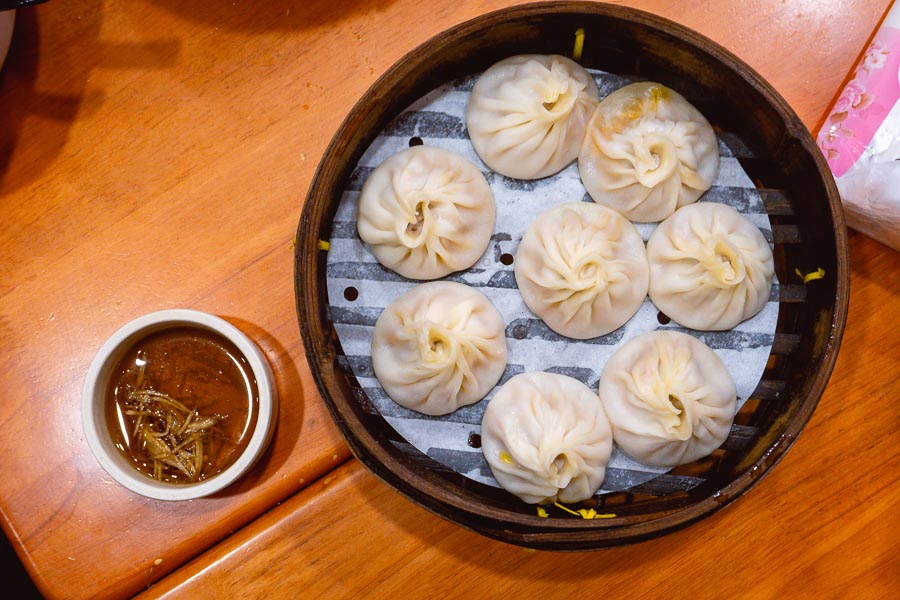
You cannot leave Shanghai without eating xiao long bao — arguably the most iconic food this city has to offer, and the one dish every “what to eat in Shanghai” list has to include. It’s a soup dumpling: a thin, pleated wrapper holding together hot broth and meat (usually pork, sometimes crab, sometimes both). There’s a method to eating it without scalding yourself or losing the soup — learn it here with the full XLB guide.
Try It: Lai Lai Xiao Long is #1 when it comes crab-filled xiao long bao in Shanghai — they have their own farm and pick their own crab meat. There’s always a line at the Huangpu original, but it’s worth it. (Don’t worry, it moves fast.) But my personal favorite for the everyday version is Man Man Tang Bao, a hole-in-the-wall that does it with an even thinner wrapper, more Nanjing style, but cheap, easy, and comes with the whole “full Shanghai experience” of walking through the kitchen.
Hairy Crab in Shanghai
Hairy crab in Shanghai is closer to a cult than it is a dish or a season. And these days, thanks to demand, you can find some version of it year-round. For the full rundown of where to for 大闸蟹, see my brief but straightforward Shanghai hairy crab guide.
Hairy Crab Noodles (蟹粉面)
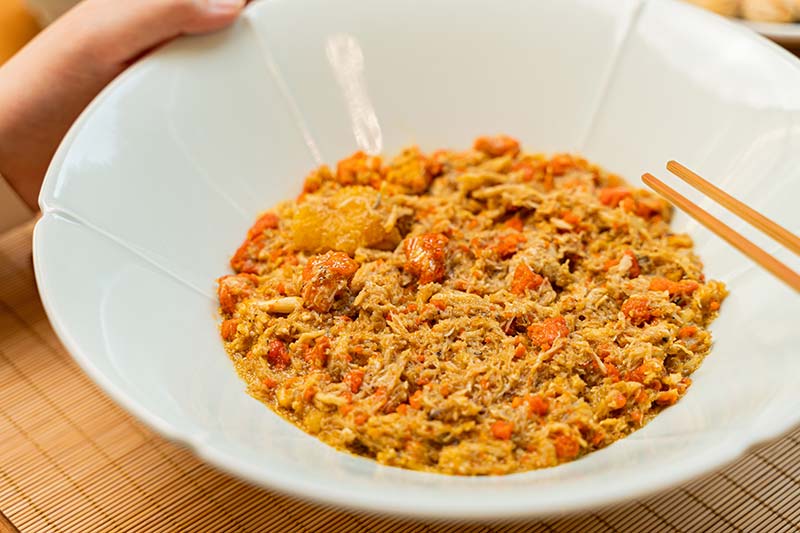
This is Shanghai’s ultimate luxury bowl: noodles buried under a heap of hand-picked crab meat and orange-gold roe. It’s rich, briny, faintly sweet, and not cheap — but if you’re going to splurge on one bowl of noodles in Shanghai, make it this one. Don’t forget to add a dab of vinegar.
Try It: Cejerdary on the Bund is the name to know. They are specialists when it comes to hairy crab noodles. They run their own crab farms near Yangcheng Lake, which keeps quality in check.
Hairy Crab Rice (蟹粉拌饭)

The same idea as the noodles: a bowl of rice loaded with crab roe and meat. The best versions of hairy crab rice come in a stone pot, so the stone keeps the rice warm and crisps the bottom bits. Yum! When hairy crab is done this way, it can have a strong smell (腥味) when it gets cold, hence the heat and bit of vinegar.
Try It: Ren He Guan, a Michelin one-star Shanghainese restaurant, does an excellent version — and it’s a good excuse to also order their scallion oil noodles and hong shao rou while you’re there.
Hairy Crab Banquet (蟹宴)
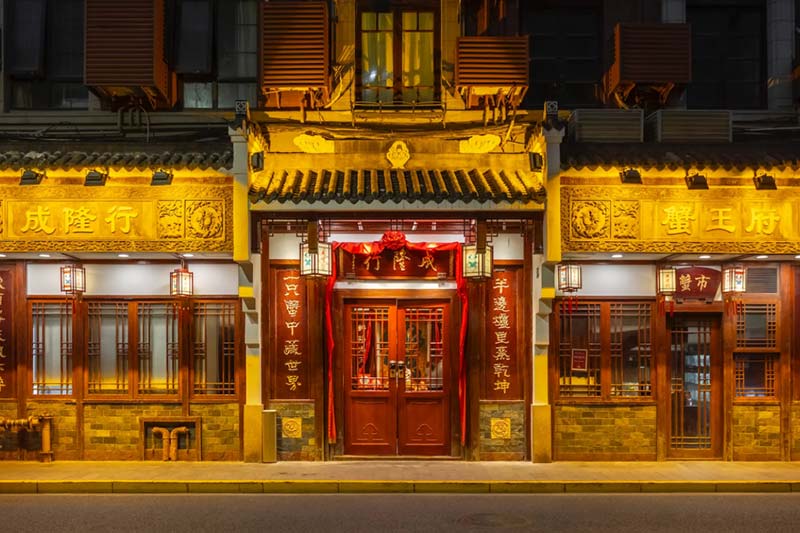
If you want a full menu dedicated to the critter, then it’s a hairy crab banquet or hairy crab feast for you. An entire course-by-course meal featuring hairy crab prepared five or six or a dozen ways, usually culminating in a single crab for you to pick apart.
Try It: Cheng Long Hang specializes in this. This restaurant is lauded as Shanghai’s hairy crab banquet institution, serving their crab set menus all-year round. Fancier tastes? Michelin one-star Shanghainese restaurants Fu 1015 and Fu 1088 serve their “crab feast” menus during the season, September to December.
Hairy Crab, Whole (大闸蟹)
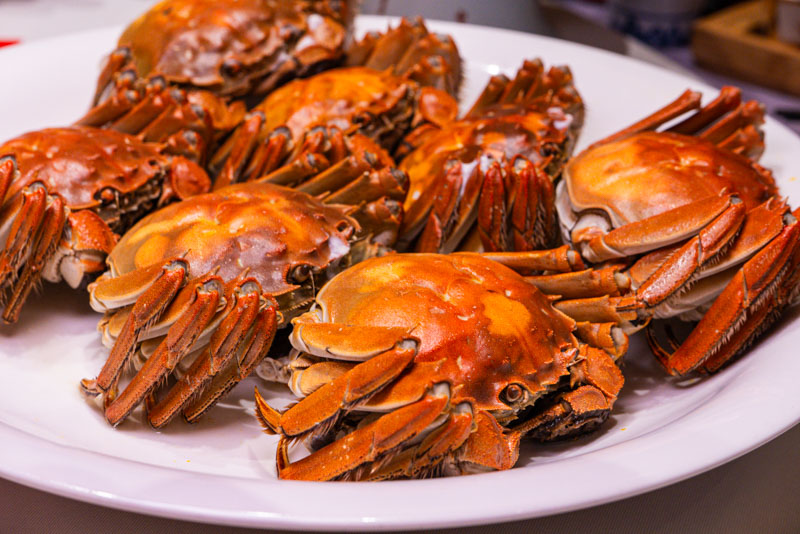
For purists, there’s no substitute for the crab itself. Usually, it’s simply steamed, and served with the requisite ginger-vinegar dip. Restaurants usually give you tiny tools to help with scraping out the meat, a slow and messy process (my POV), but a beloved pastime for fans of the crab.
Try It: Kong Yi Ji, a Shaoxing-specialty restaurant, does hairy crab alongside its regional classics. The restaurant also has its own Shaoxing wine production, the perfect and most traditional pairing with crab.
Fried Snacks
Shanghai’s fried dumpling game is a genuinely confusing rivalry to outsiders — guotie and sheng jian bao might sound similar on paper, but trust me, those are two completely different things, and people have strong opinions about both. Click here for the full guide to both.
Guotie (锅贴)

Guotie are pan-fried dumplings, crescent-shaped, wheat wrappers that are cooked in a cast iron to crisp the bottom, covered to steam the tops. Usually filled with pork
Try It: Hong Yu Fang does a reliably excellent version, golden and crackly on the base, tender on top. Another favorite of mine is Shu Cai Ji, a hole-in-the-wall near the Bund which I took YouTuber Joshua Weissman to on his Shanghai tour (12:23, if you’re watching). Expect to wait/queue/jostle at these spots, but that’s part of the fun.
Sheng Jian Bao (生煎包)

Sheng jian bao are the doughier answer to guotie — round, pan-fried, with a puffed top and an equally crispy bottom. There are two schools of sheng jian bao: leavened and unleavened; one fluffier than the other.
Try It: My number one is Da Hu Chun, a Shanghai institution that’s been perfecting this bun for decades. They do the fluffy kind, which soaks up the juices/soup within. Yang’s is the commercial version, it’s alright; perhaps not my favorite but worth trying if you prefer the unleavened version.
Noodles
Shanghai’s noodle scene is a culture in itself, and deep enough to justify its own noodle crawl — here are the top bowls that belong on any Shanghai food list.
Scallion Oil Noodles (葱油拌面)

Shanghai’s most iconic dry noodle, and its simplest: scallions slow-cooked in oil until deeply caramelized and crispy, combined with soy sauce and a tiny bit of sugar, served with gummy noodles and, usually, dried shrimp. Cheap, everywhere, and simply satisfying.
Try It: Dong Tai Xiang is the reliable standby, open 24/7 if you need a fix. Otherwise, head to Jian Guo 328, a casual Shanghainese eatery that also has a wine list!
Yellow Croaker Noodles (黄鱼面)
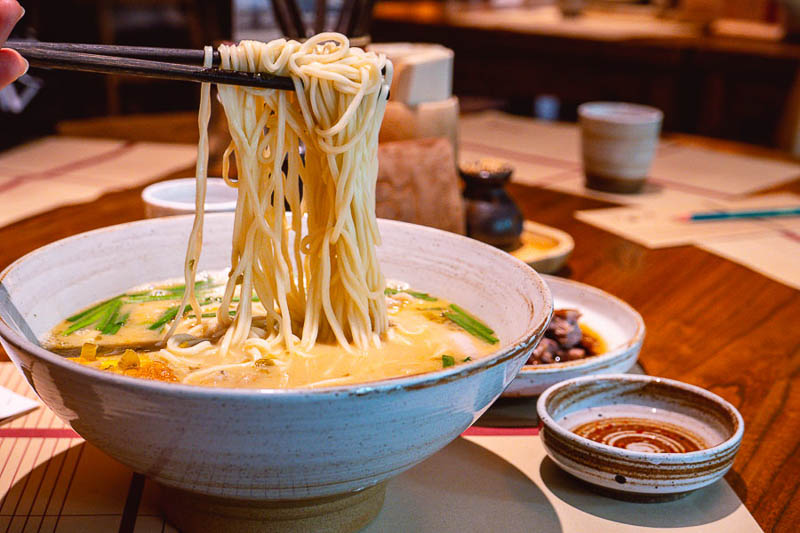
Yellow croaker noodles comes in two styles: a milky, collagen-rich broth simmered from fish bones, or a clear soy-based broth built around braised croaker fillets. Either way, the fish quality is key. Often times the milky version is further flavored with pickled mustard greens.
Try It: Rongjia Noodles Soup does the milky-broth classic, a long-standing Bib Gourmand restaurant. The kicker — they get their premium croaker from sister restaurant Michelin starred Xin Rong Ji.
Sesame Noodles (麻酱面)

There are few things are as pure and as comforting as a bowl of sesame noodles. Firm noodles are coated in creamy sesame paste (sometimes loosened with peanut butter), and finished with a drizzle of chili oil.
Try It: Wei Xiang Zhai, running since 1937, is the undisputed standard-bearer here. They basically founded this style of noodle. Pro-tip: add a splash of vinegar when you eat the noodles.
Yangchun Noodles (阳春面)
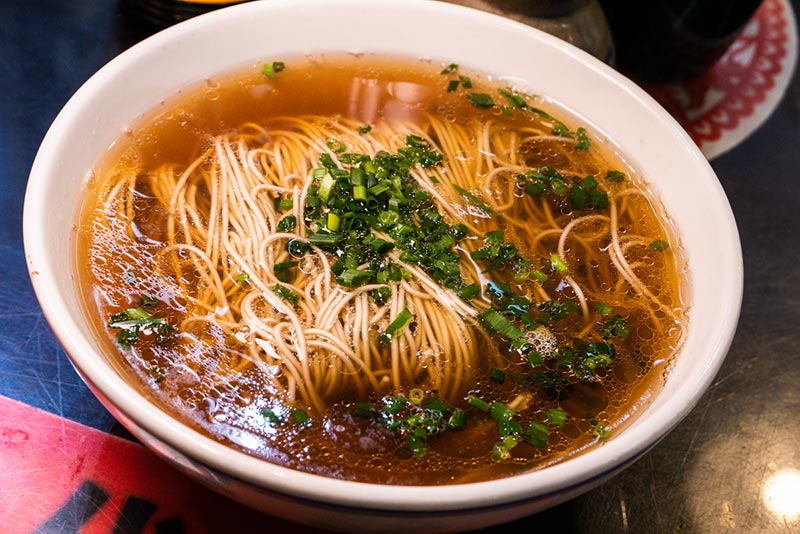
Yangchun noodles are essentially the blank canvas of soup noodles — light pork-bone broth, a spoonful of lard, soy sauce, scallions, and thin wheat noodles cooked to a firm texture. The simplest sounding and yet easiest dish to get wrong. The magic is the balance in the soup!
Try It: Yi Gui He again — their version is springy, clean-tasting, and lets the noodle texture do the work. Again, they season the broth with their own house-aged soy sauce.
Jiaotou Noodles (浇头面)
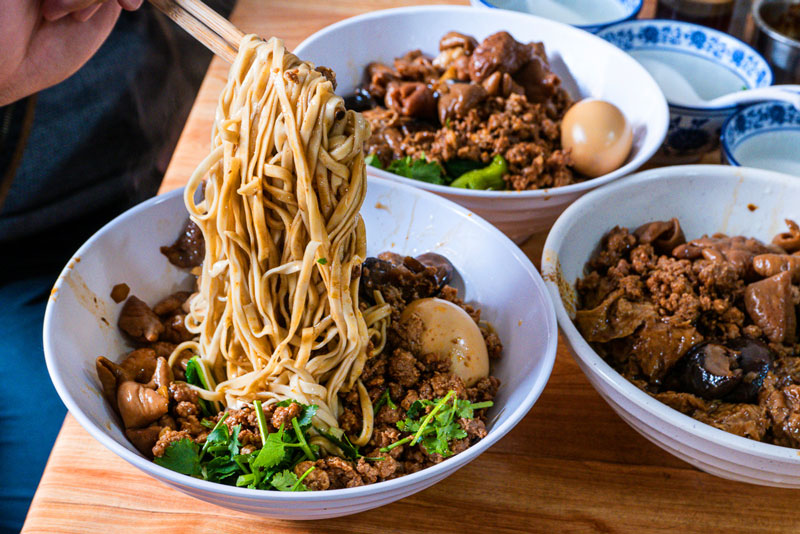
Jiaotou mian basically means “topped noodles.” It’s less a single dish than a build-your-own bowl, where you get noodles (dry or soup) and load them with whatever toppings laoban has for you that day.
Try It: San Lin Tang has been slinging bowls since 1981 and remains the standard-bearer for this style. They do something quite specific: braised pork intestines, pork mince, and kaofu (wheat gluten). Skip the intestines if those aren’t your thing.
Cold Noodles (冷面)
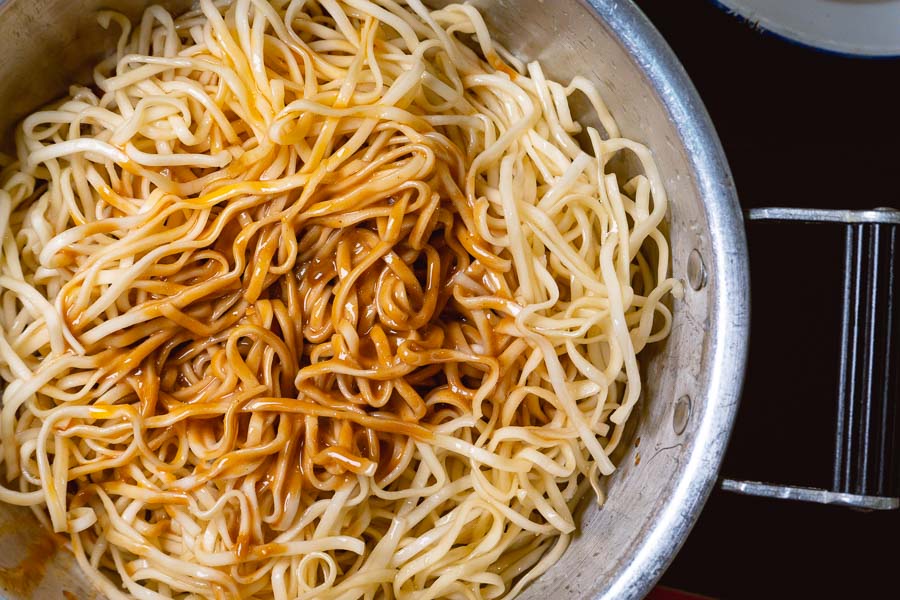
Cold noodles aren’t limited to just Shanghai! Every province has their own version, and honestly, it’s quite a broad category. But the most common one in Shanghai are these: wavy wheat noodles cooked to a firm bite, dressed in a light sesame or sesame-peanut sauce, topped with shredded cucumber.
Try It: Yi Gui He makes its own noodles and seasons them with house-made aged soy sauce. It’s probably 2x or 3x pricier than the basic noodle spot, though.
Breakfast
Shanghai’s breakfast culture happens fast and early, mostly on the street, and it’s some of the best cheap eating in the city.
Jianbing (煎饼)

Jianbing, the “Chinese breakfast pancake,” is closer to a savory crepe wrapped like a burrito. It’s always griddled to order, batter spread onto a cast iron pan, then folded around egg, crispy cracker, scallions, and doubanjang sauce. Jianbing can be found all across China, and beloved nationwide. It’s the most portable breakfast, eaten on the walk to work.
Try It: My go-to is Pancake House — quick, consistent, and in a neighborhood that’s in close proximity to where I live. That’s mostly what people will suggest when you ask “where’s the best jianbing”: the one most convenient. Pancake House is also where Joshua Weissman and I went for breakfast (25:34 if you’re watching). Some wet markets, especially the larger ones, usually have jianbing stalls within or nearby.
Doufuhua (豆腐花)
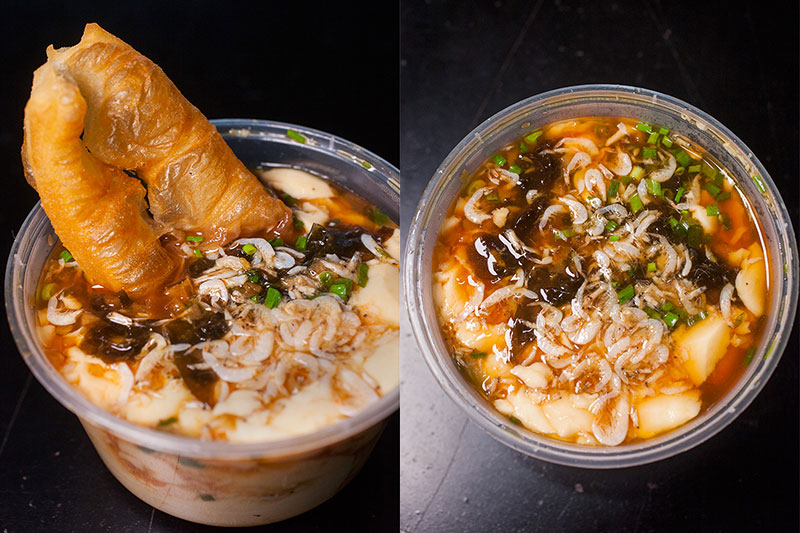
Doufuhua is a silky tofu pudding, served either savory (soy sauce, chili oil, dried shrimp, pickled vegetables) or sweetened. It’s soft, delicate, and one of the gentler ways to start a Shanghai morning.
Try It: I’m partial to the savory version, and I get mine from Taoyuan Village — clean and cheap.
Youtiao (油条)
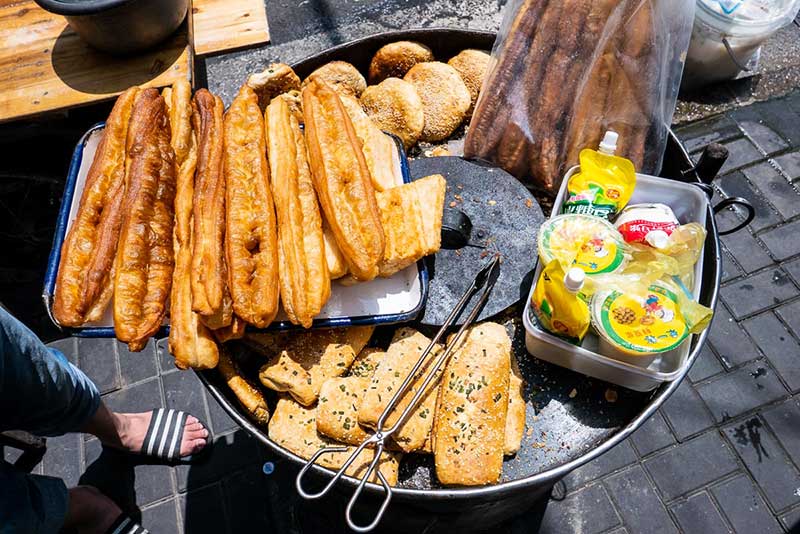
Youtiao are deep-fried dough sticks, crisp outside and airy inside. It’s the classic partner to soy milk or doufuhua, and one of the most recognizable breakfast foods across China. You want to get youtiao fresh out of the deep-fryer, usually a wok on the street that’s dangerously full of bubbling oil.
Try It: Taoyuan Village does a good one, but honestly, you’ll find fresh youtiao at any large wet market in the mornings or nearby busy metro stops like Zhaojiabang Road, People’s Square, or Yu Gardens.
Scallion Pancakes (葱油饼)
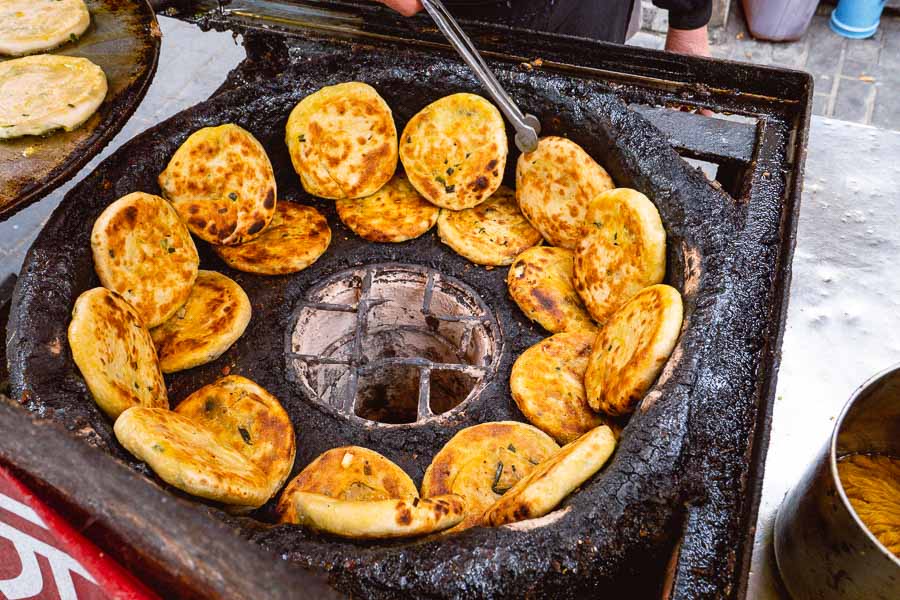
Scallion pancakes might look and sound simple, but it’s a snack that requires time and patience to properly make. The dough greased with pork lard, folded with fistfuls of scallions, then flattened out into a disc. It’s first pan-fried then baked, the second part most crucial to drying out the oil and crisping the layers. Full scallion pancake guide here.
Try It: I always recommend Xiao Yang Zhou, one of the last remaining street cart in downtown Shanghai, one that’s still making scallion pancakes the old school way.
Huntun (馄饨)

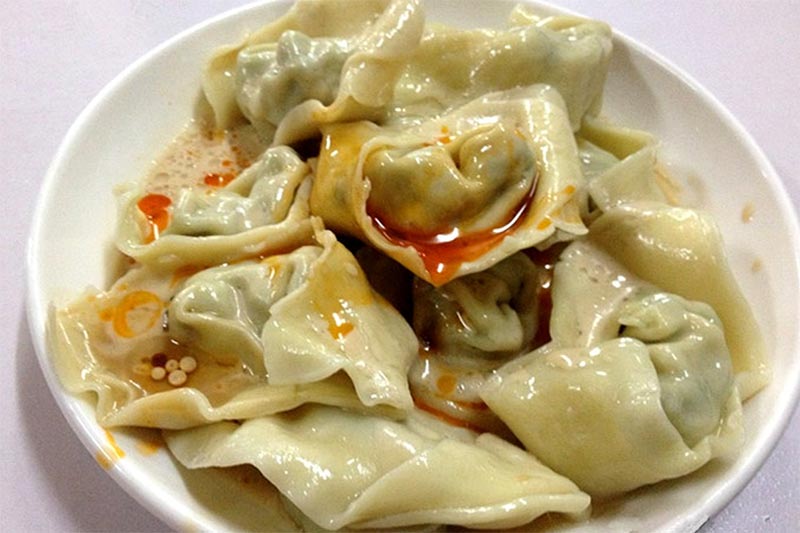
Wontons: thin-skinned parcels of pork (sometimes shrimp) with shepherd’s purse greens, served in a light broth or dry, and sometimes, doused in peanut sauce, and always with a splash of chili oil.
Try It: Er Guang is a solid classic choice. Dong Tai Xiang does an excellent peanut sauce version worth seeking out.
Classic Shanghainese Dishes (本帮菜)
This is the heart of it — the benbang dishes that define Shanghainese home cooking: soy-heavy, often sweetened with rock sugar, and built around seasonal ingredients.
Hong Shao Rou (红烧肉)
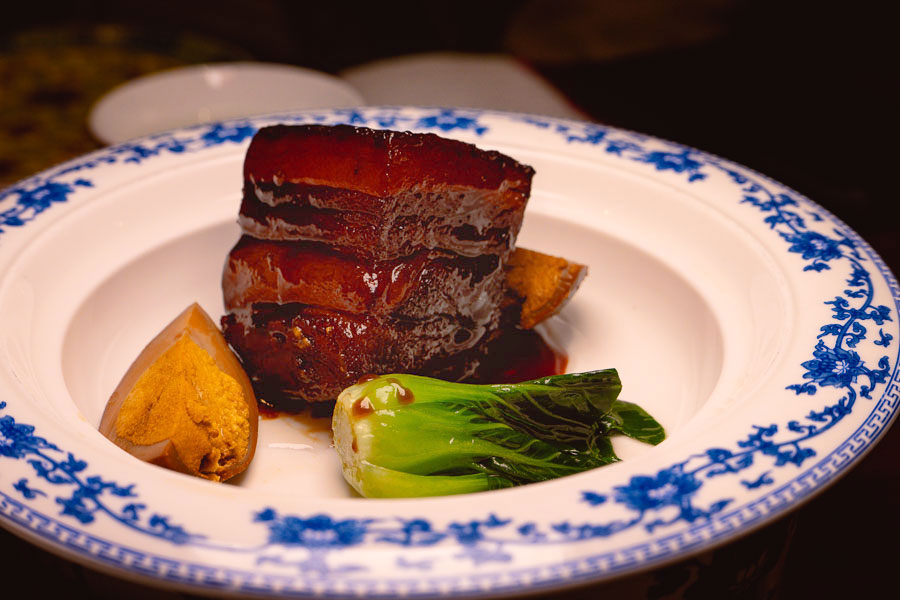
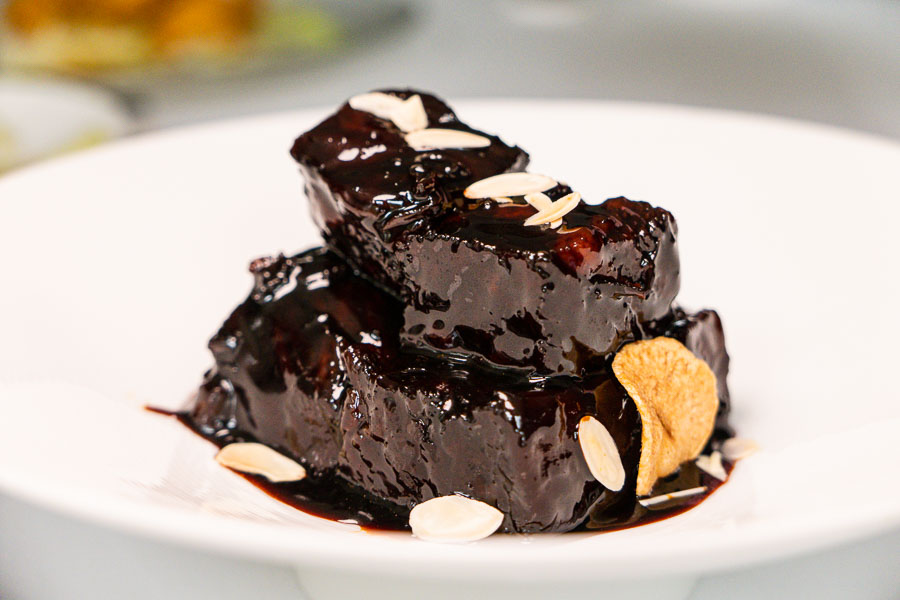
Ah, the glorious hong shao rou aka red-braised pork belly. The belly cut is simmered low and slow in soy sauce, rock sugar, and Shaoxing wine until it’s meltingly tender and lacquered a deep mahogany. Arguably the most famous Shanghainese dish, and the one that best represents the cuisine’s sweet-savory backbone.
Try It: Ren He Guan is my personal favorite. For a fancier occasion, Fu 1088 does an elevated version; for something leaner, Rui Fu Yuan uses more rib cuts and is less fatty.
Smoked Fish (熏鱼)
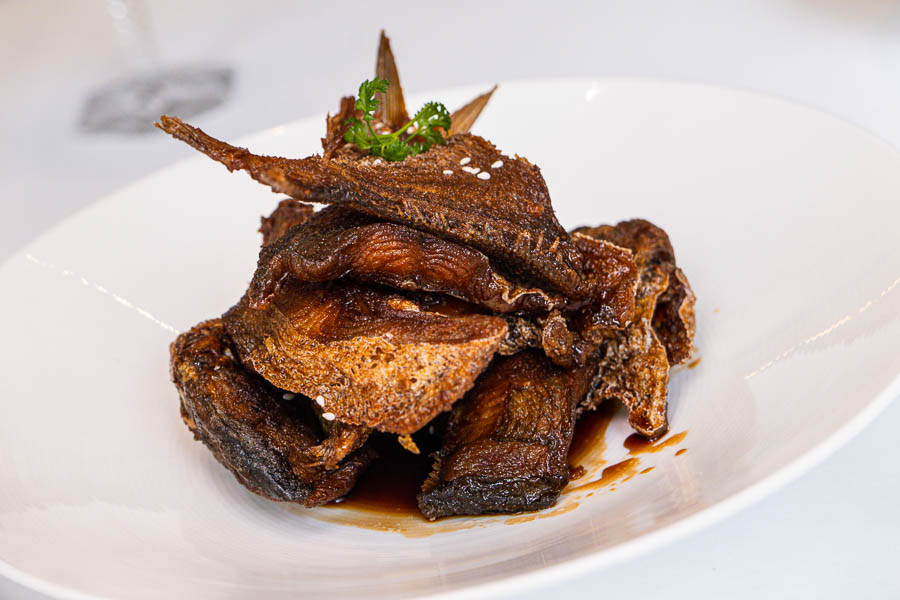

Despite the name, smoked fish isn’t actually smoked — it’s fried! The fish, usually beltfish, is coated and fried in a sweet soy glaze, served cold as a starter. It’s one the most deceptively simple dishes on any Shanghainese menu, yet highly addictive due to the sugar content in the glaze.
Try It: Both Fu 1088 and Fu 1039 do excellent versions — sister restaurants, similarly polished.
Scallion Fish Head (葱油鱼头)
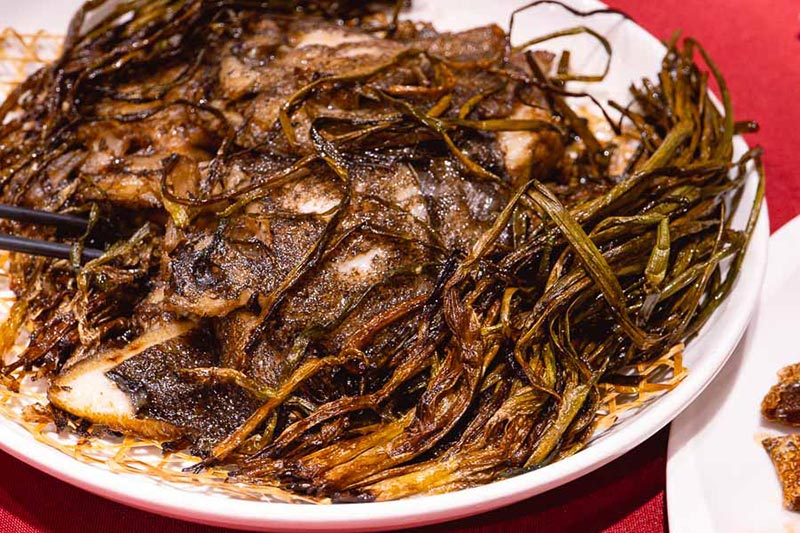
Fish head roasted under a blanket of scallions, prized for the collagen-rich texture around the cheeks and jowls. It’s absolutely fragrant and the perfect companion with rice.
Try It: This dish isn’t exactly a Shanghainese classic, but it should be. It’s made famous by Shanghainese institution Old Jesse — a place that’s easily in everyone’s top ten must try restaurants in Shanghai.
Yellow Croaker Dumplings (黄鱼小馄饨)
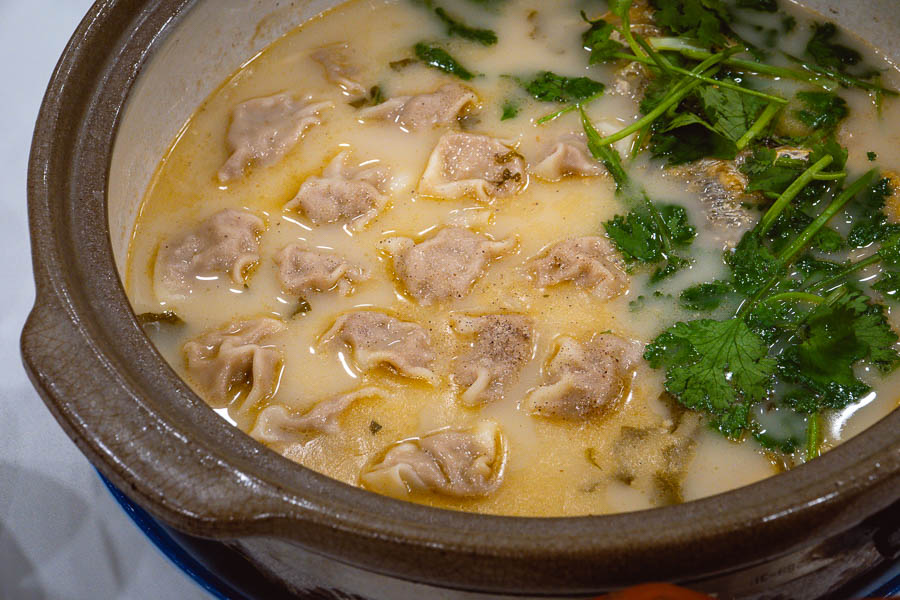
A more refined take on the everyday wonton, filled with flaked yellow croaker instead of pork — delicate, faintly sweet, and a good showcase of Shanghai’s obsession with this fish.
Try It: Rui Fu Yuan does a standout version, served with additional yellow croaker in a massive bowl of soup.
Red Braised Whole Pork Hock (红烧蹄髈)
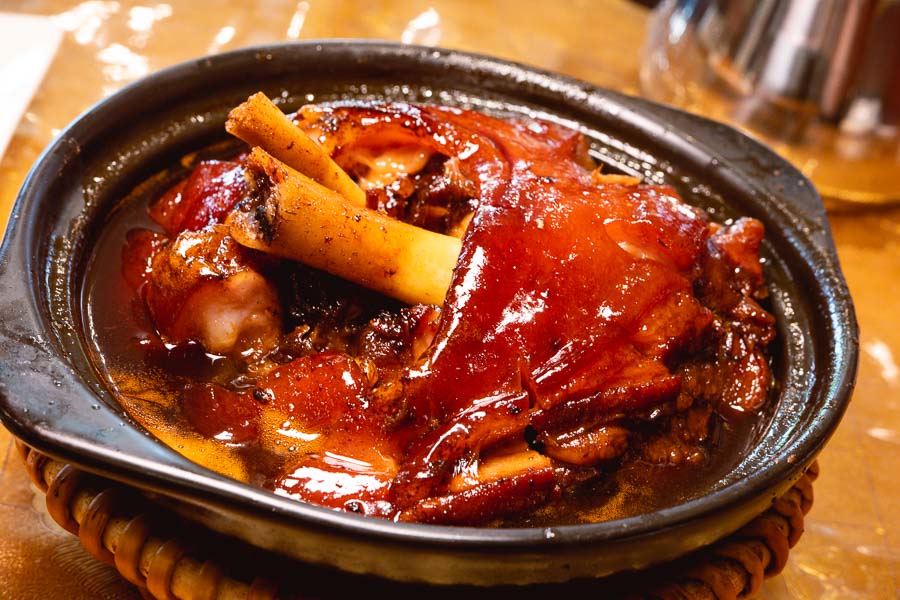
This is hong shao rou’s bigger, more theatrical cousin — the tipang, a whole pork hock braised low and slow in the same soy-sugar-Shaoxing wine base until the skin goes fatty, gelatinous, jiggly-wiggly tender. It’s a rice-lover’s dish through and through, meant to be eaten spoonful by spoonful over a full bowl.
Try It: A Yue Bao is ranked number one for this dish, literally on Dianping. It’s a machine of a restaurant that specializes in whole pork hock, and does it real cheap. Served here in a sizzling claypot, so tender you can “cut” the meat with its own bone.
Sizzling Eel (爆炒鳝鱼)
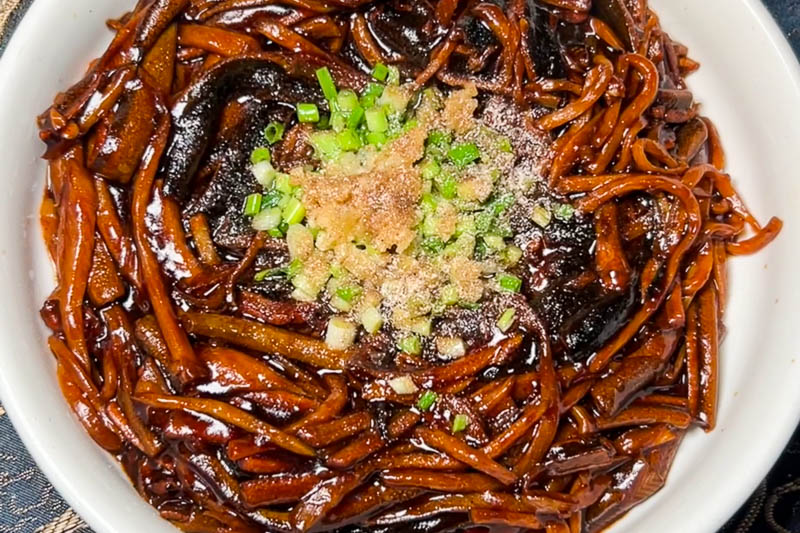
Flash-fried eel served with soy sauce, white pepper, and a generous helping of raw garlic. The Chinese descriptor for this dish, 爆炒 bào chǎo, literally means “explosion frying” (lol), which gives you an idea of how it’s cooked. The dish is usually still sizzling when it arrives to the table, as a ladle of screaming-hot oil is poured over white pepper-scallions-garlic mix to unlock its flavors.
Try It: Xiao Ping Restaurant, a reliable neighborhood spot in the former French concession, does a great version. Go early or be prepared to queue.
Pork Lard Rice (菜饭)
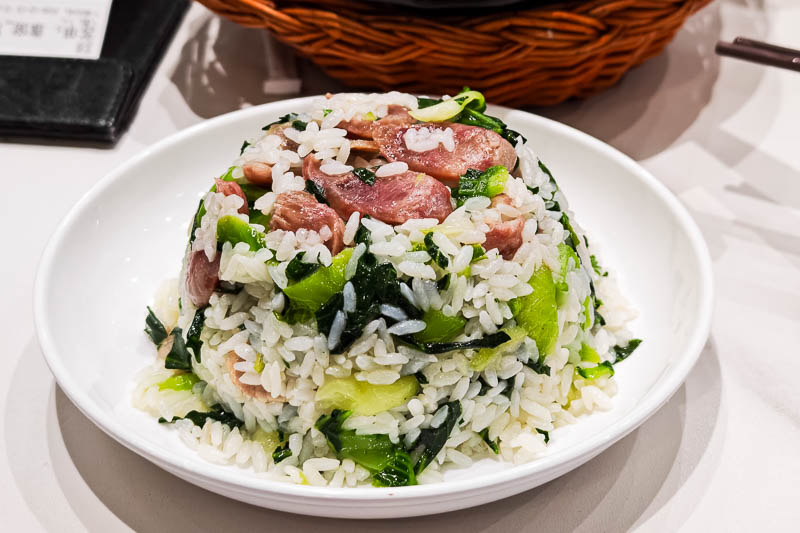
Cài fàn literally means “vegetable rice.” This is a workmen’s staple, rice cooked with pickled mustard greens, bok choy, cured pork, and a spoonful of lard — humble, fragrant, and one of the greatest comfort dishes.
Try It: Both Shu Cai Ji and Hong Yu Fang do excellent versions.
Bur Clover with Baijiu (草头)
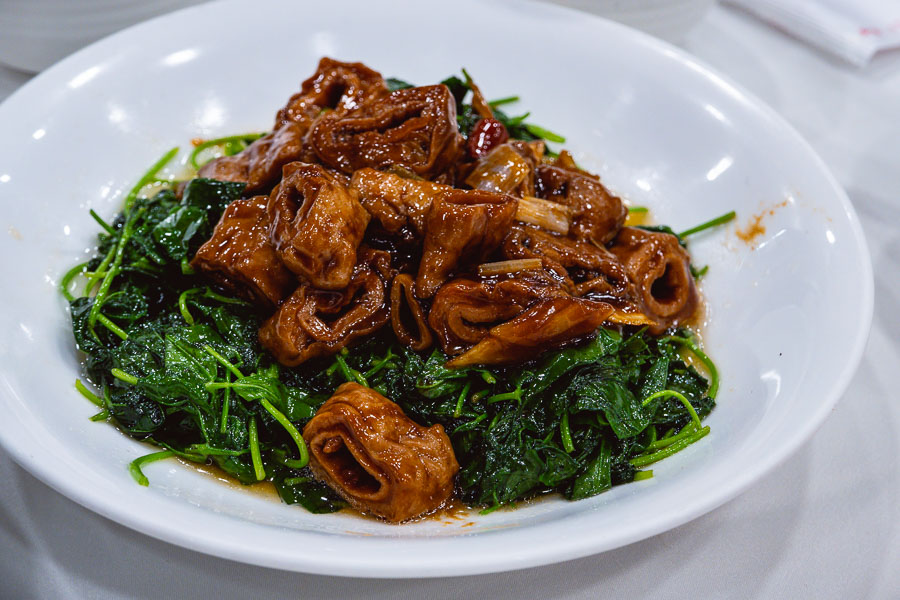
Bur clover aka cǎo tóu is a seasonal leafy green that becomes available from November to April. It’s usually flash-fried and flambéed with baijiu — yes, the infamous high-proof Chinese spirit — which imparts a uniquely sweet fragrance to the wilted greens. Bur clover are served as is, or something paired with braised pork intestines.
Try It: Available seasonally at most proper Shanghainese restaurants — check my guide to the best Shanghainese restaurants for a solid list.
Yan Du Xian (腌笃鲜)
Yan Du Xian is a soup dish built fresh pork belly and cured pork, simmered with seasonal bamboo shoots until the broth turns milky and deeply savory. One of the more seasonal dishes on this list — best eaten in spring, when bamboo shoots are at their peak. Xiān (鲜) is the Chinese word for ‘umami,’ so you can imagine where the dish got its name from.
Four Happiness Kaofu Salad (四喜烤麸)

Four Happiness Kaofu Salad, or Sixi Kaofu, is a humble cold appetizer, and vegetarian too! A classic in benbang lineup: spongy wheat gluten (kaofu) braised in soy sauce alongside shiitake, wood ear mushrooms, and peanuts, sometimes joined by other mushrooms like golden thread. It leans sweet, which is exactly why it can split the crowd; some people can’t stand it, I adore it.
Try It: You don’t need to hunt for this one. It’s available at nearly every Shanghainese restaurant. It’s also a fixture at fast-food to-go counters, the ones usually found at wet markets, scooped from a tray and sold by weight to take home.
Squirrel Mandarin Fish (松鼠桂鱼)

Technically more Jiangsu than Shanghainese in origin, but firmly adopted here: a whole fish scored, fried until the pieces curl like a squirrel’s tail, then draped in a sweet-and-sour sauce. As much a visual centerpiece as a dish.
Try It: Ren He Guan does a good rendition, worth ordering if you’re already there for the hong shao rou or hairy crab rice.
Braised Spring Bamboo Shoots (油焖笋)
This one’s just a personal favorite of mine. Braised bamboo shoots are more of Zhejiang dish, the region where all of Shanghai gets its spring bamboo from. The dish is simple, fresh spring bamboo shoots are braised in oil, soy sauce and sugar until glossy and tender — a simple vegetable dish that’s sweet and savory with a delicious crunch.
Try It: Order this in spring at any solid Zhejiang restaurant or Shanghainese restaurant. Both will usually have spring bamboo in this form or another come the season.