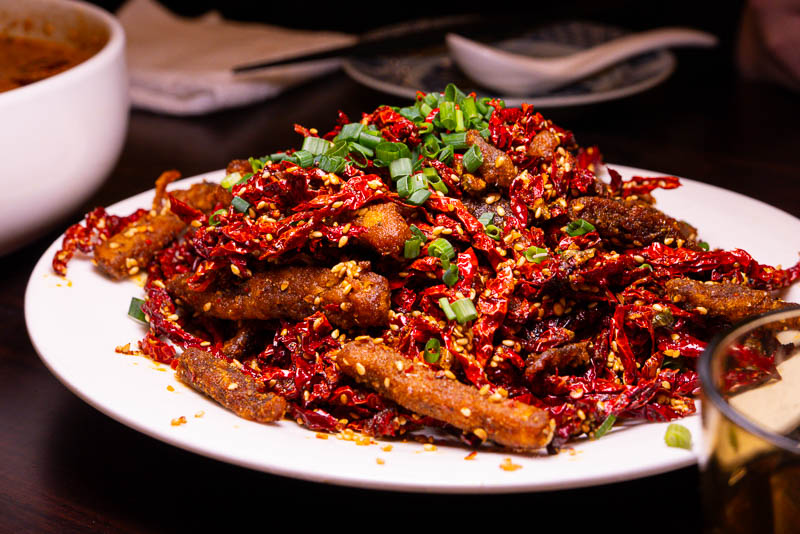
Over on Jinxian Lu is Four Seasons Cuisine (四吉饭店), a Sichuan restaurant that’s been burning up socials for its authentic Sichuan fare backed by serious culinary pedigree and its tavern-like vibe.
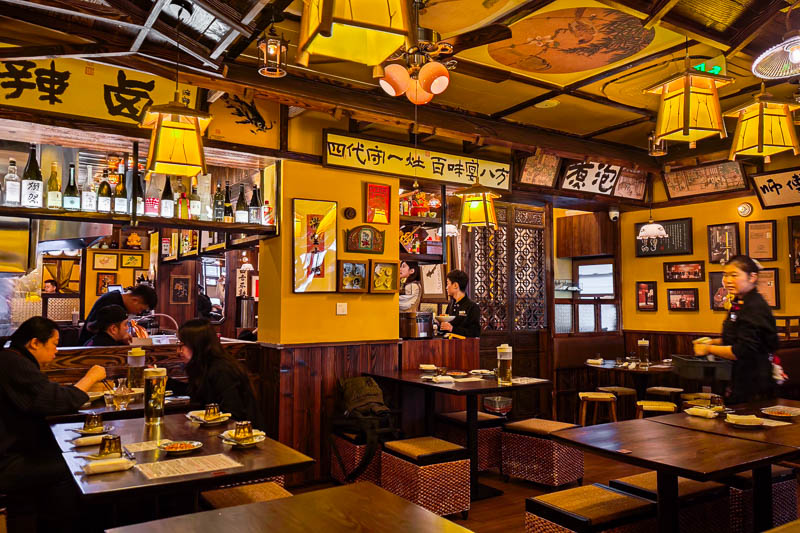
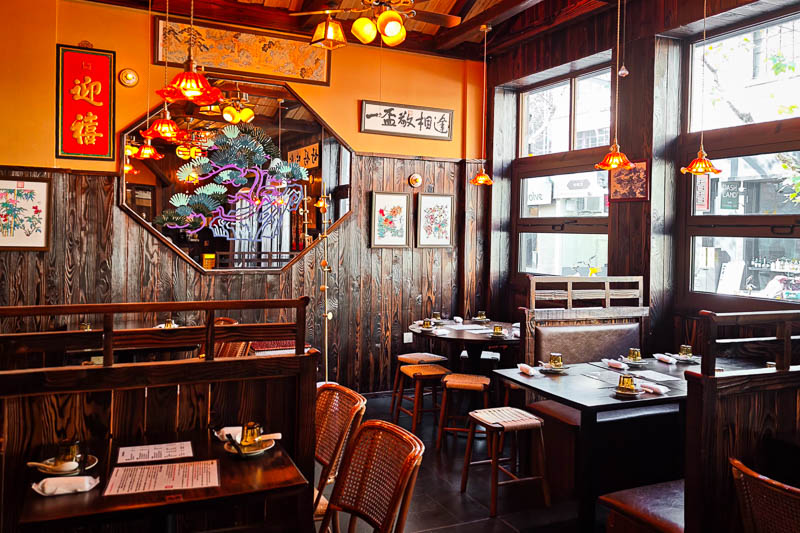
The restaurant has a trendy, tavern-like atmosphere, a visual hybrid of a rustic Chinese bistro and drinking den. Its wooden aesthetics, similar to izakayas, have been likened to neighbor San Bai Bei, though the connection between the Ningbo restaurant ends at the decor.
Four Seasons for Sichuan Food in Shanghai
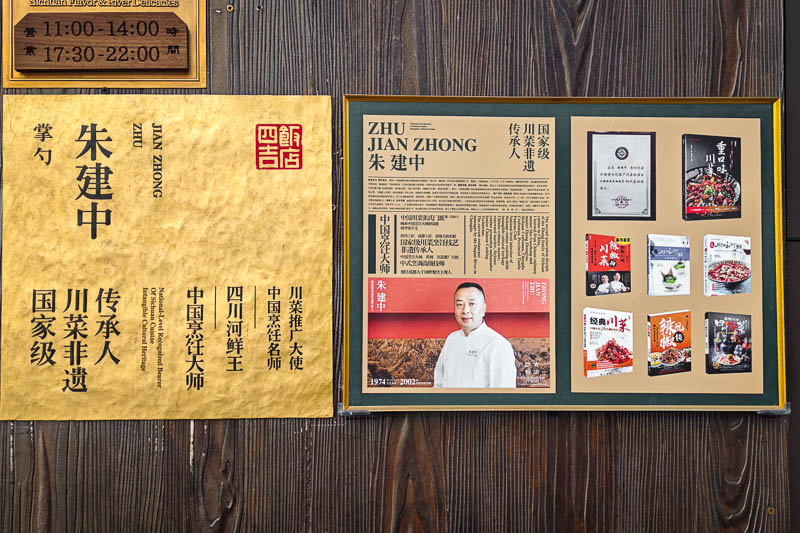
Four Seasons Cuisine’s authority is rooted in its founding chef’s lineage. Chef Zhu Jian Zhong (朱建中) is a Sichuan cuisine Grand Master, a second-generation disciple of the esteemed Zhang School, so it reads on the placard posted at the entrance to the restaurant. He carries decades of expertise honed under other acclaimed masters Shu Guoze (舒国重) and Zhang Zhong You (张中尤). So when it comes to Sichuan food in Shanghai, this one at least has the backing to prove it.
The menu is a handwritten board listing the top ten signature dishes, daily specials, familiar classics, and late-night skewers. It also emphasizes that they specialize on river catch and that dishes are all cooked to order.
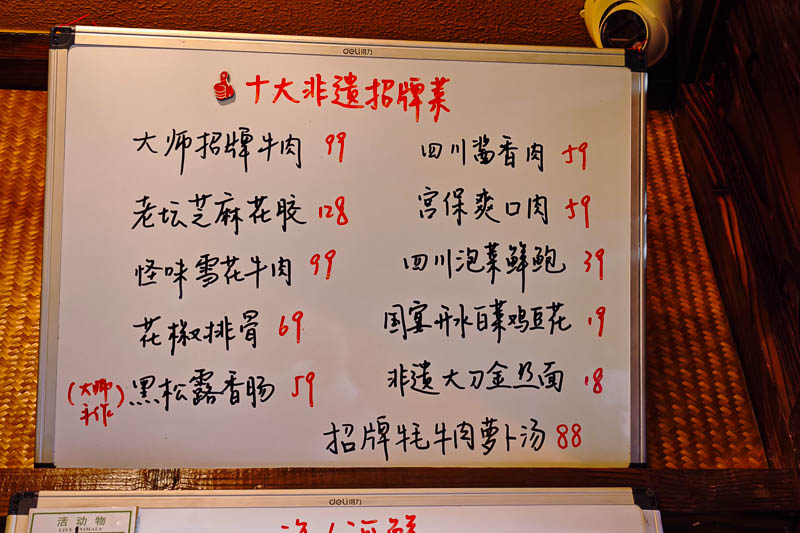
There’s even a handout, which reads like an instruction card on the restaurant’s policies, signature dishes, and best practices, including a directive of “eat well,” and “get to know the table next to you, have a drink, and chit chat.” That’s one way to cut through all the explaining the staff might have to do.
What To Order
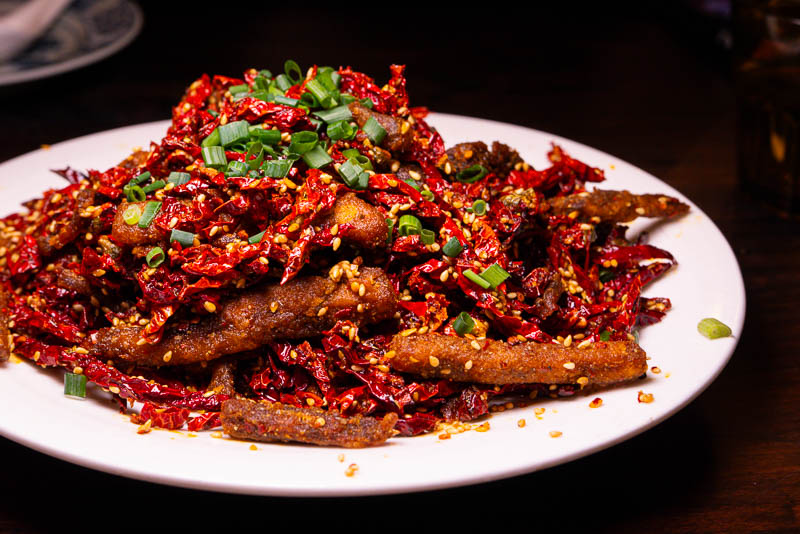
The Signature Beef (¥99, 大师招牌牛肉) is a best-seller and for good reason. Qinghai beef is wok-fried with Xinjiang Anjihai peppers, also called lapizi (辣皮子), chilies that are more sweet rather than spicy, and are just as tasty as the crispy beef itself. I know “addictive” is overused, but this one really is!
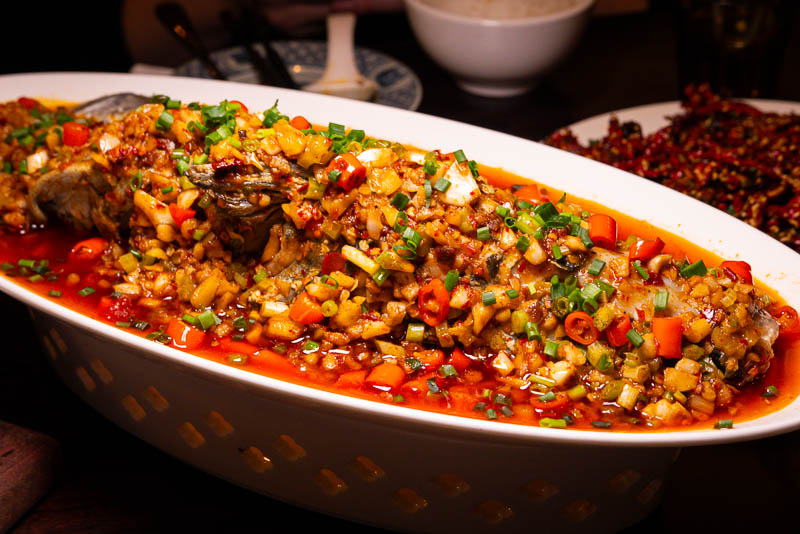
For a showcase dish, there’s the Yantuan Fish (¥268/750g, 岩团), a type of river catfish that’s air-freighted from Sichuan. It’s prized for having fewer money and for its minimal muddy flavor, a profile that’s commonly found in river fish. It’s roasted with a mountain of red chilies, scallions, and garlic, and arrives bubbling to the table.
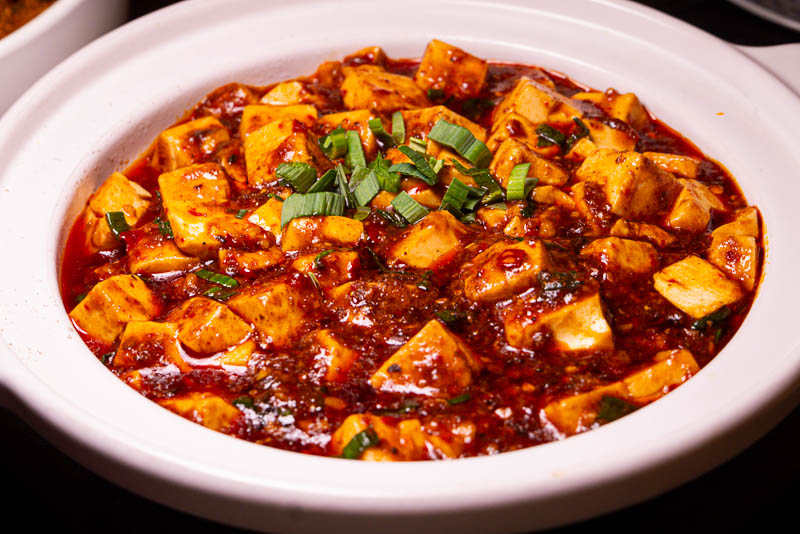
The Mapo Tofu (¥59, 麻婆豆腐) did not disappoint. This version has a direct savoriness, free of the overly smoky bean notes found elsewhere, and carries a faint, pleasant sweetness under the spice and numbing sensation.
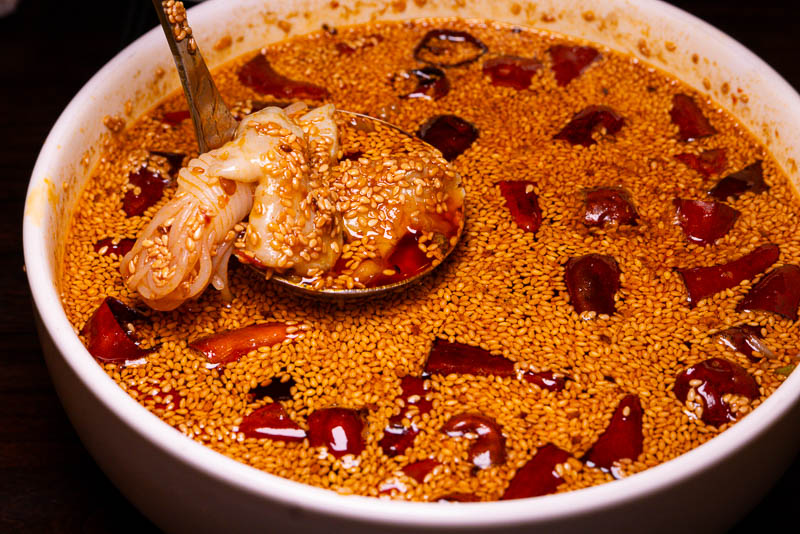
Then there’s the specialty, Catfish Maw (¥128, 老坛芝麻花胶), which is limited to a few servings daily as each dish requires the maw from five catfish. The maw, soft and gelatinous, stews in a fiery broth of chilies, toasted sesame, and pickled mustard greens. Despite the amount of oil, the flavor is clean. Its richness is also soaked up by bundles of vermicelli noodles. Absolutely love this.
When To Go
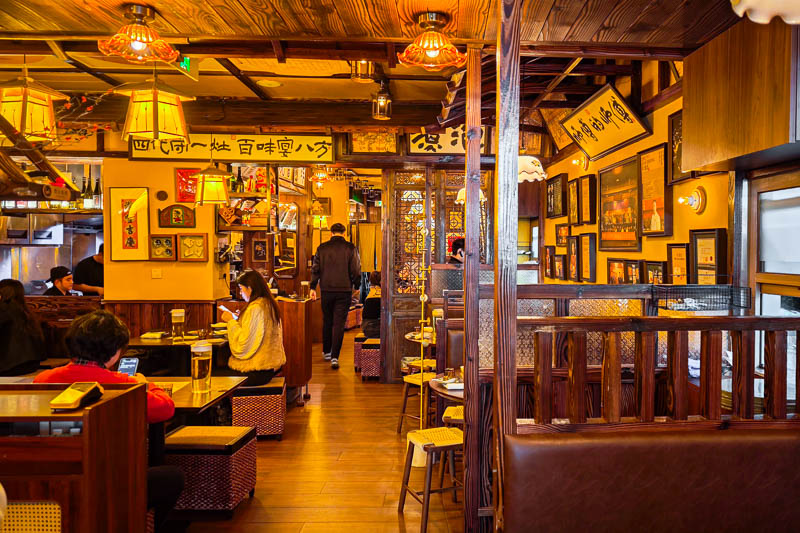
There is a catch. Dinner service at Four Seasons Cuisine is notoriously busy, and the queues can test one’s patience.
However, I found a weekday lunch to be a far more manageable — there was zero wait time — a smart move for anyone with a hankering for a proper Sichuan meal.
While I genuinely enjoyed the experience, I must note that its unapologetically traditional approach extends to portion sizes, which are pretty large. This place is best enjoyed with a crew; while two people can make it work, you’ll likely find yourselves ordering just two dishes or taking your leftovers to-go.
Four Seasons Cuisine
View the listing here.