Rambu is this season’s most anticipated new opening, offering a creative take on Southeast Asian flavors in a contemporary style that feels bold, playful, and deeply personal.
I loved it, and I intend to become a regular. For me, as a Malaysian, it’s refreshing to see the flavors of home reintroduced with care. It’s new, yet oddly familiar. Rambu doesn’t just serve food; it carries memory and sparks curiosity, all plated with confidence and deep-seated respect for the cuisines it draws from. The result evokes nostalgia and sentiment, especially for those familiar with these flavors.

About Rambu
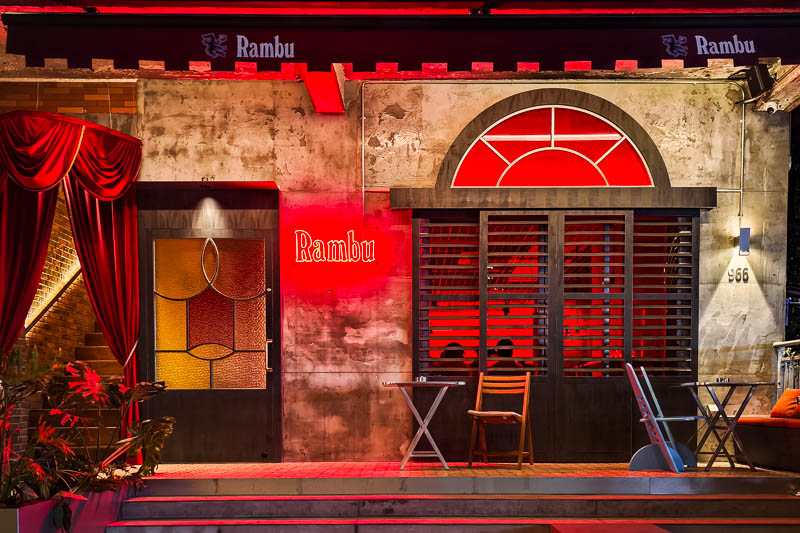
Rambu is located on Wuding Lu in Jing’an, its facade marked by a glowing neon-red sign.
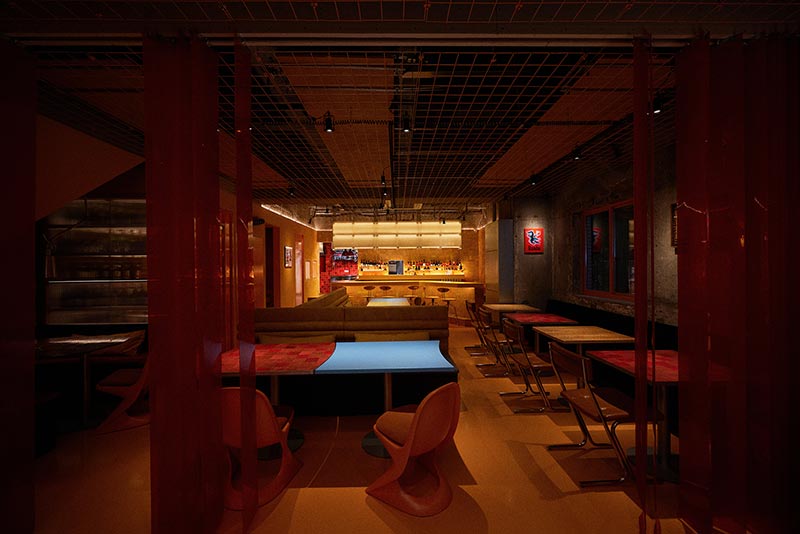
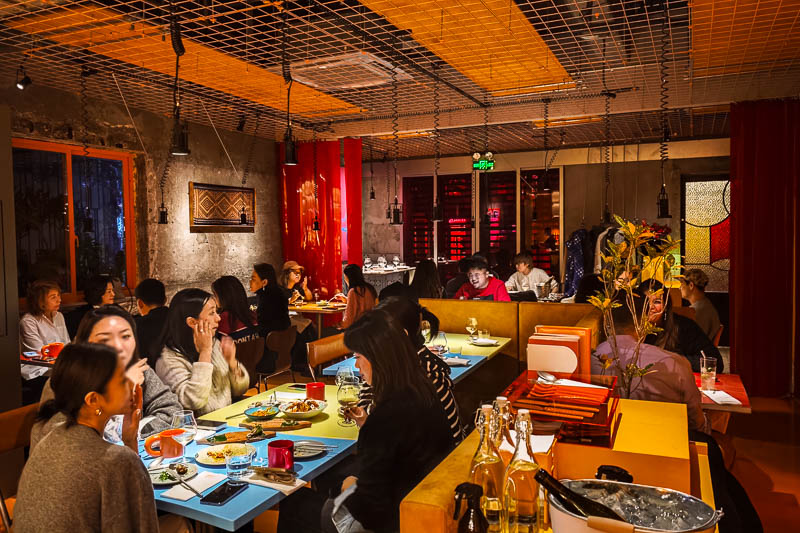
Inside, the room feels cozy and intimate, yet carries a communal energy that naturally prompts conversations with neighboring tables. An eclectic mix of baby blue and pandan green tables light up the room, while a bright yellow, wavy bar draws the eye toward the kitchen. Batik pieces, congkak boards, and the restaurant’s ant-eater logo add nuanced accents throughout the space.
By the way, Rambu is named after the rambutan, the furry red fruit of Southeast Asia.

This project is powered by a formidable group of gastro creatives: Chef Jun Nishiyama and Alice Fan (formerly of Sage), alongside Tiger (formerly of Ambra) and Chad (Bar Choice / Man Tang).
As I was writing this, Sage announced its closure, with its final service on Dec 31. It’s important to mention, as Sage has been my favorite restaurant since it opened, largely because of Singaporean chef Jun, whose food has been absolutely stellar. It’s a bittersweet ending to a restaurant where so many memories were made.
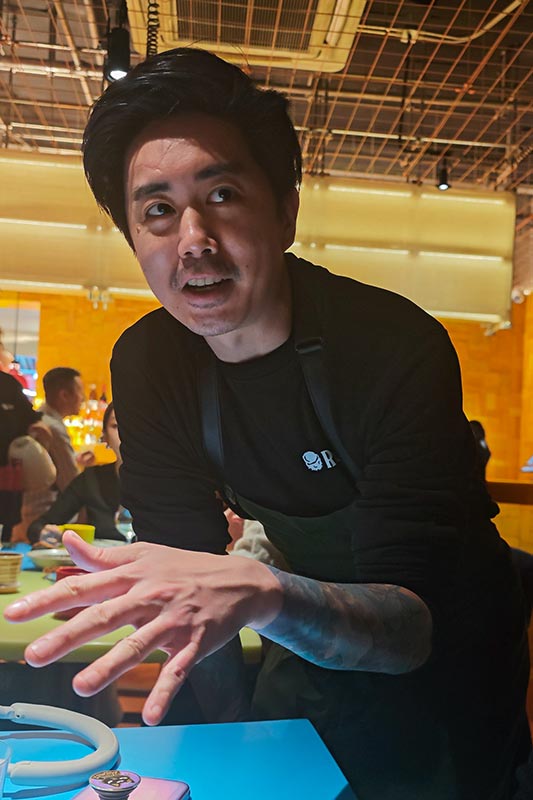
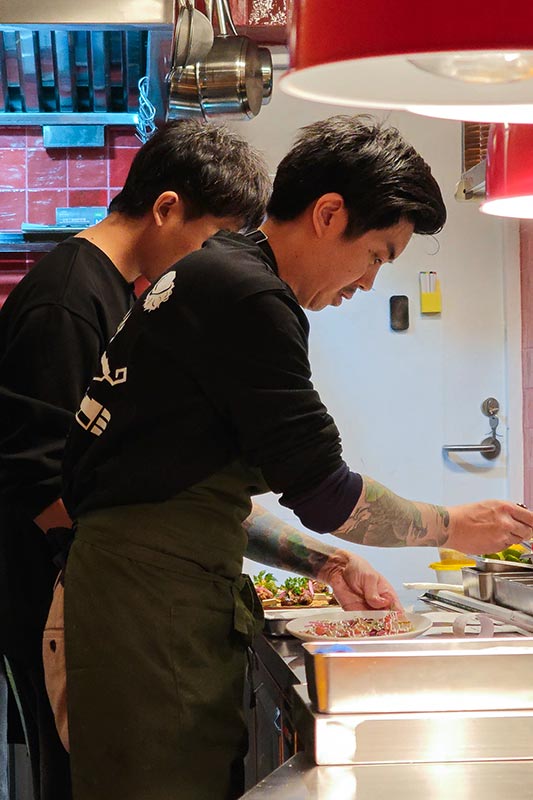
But when one door closes, another opens — and I’ll follow chef Jun wherever he goes.
The Food
Rambu’s menu draws from Southeast Asian spices and flavors, self-described as a “fun, joyful escape,” blending Thai, Malaysian, Singaporean, and Indonesian cuisines, and beyond, into something expressive yet approachable. Think ginger torch flower, laksa leaves, kalamansi, turmeric, and even buah keluak, the black gold of Peranakan cooking.
This is not a place for recreations of the classics or textbook nasi lemak. Tradition and flavors are referenced, then reinterpreted.
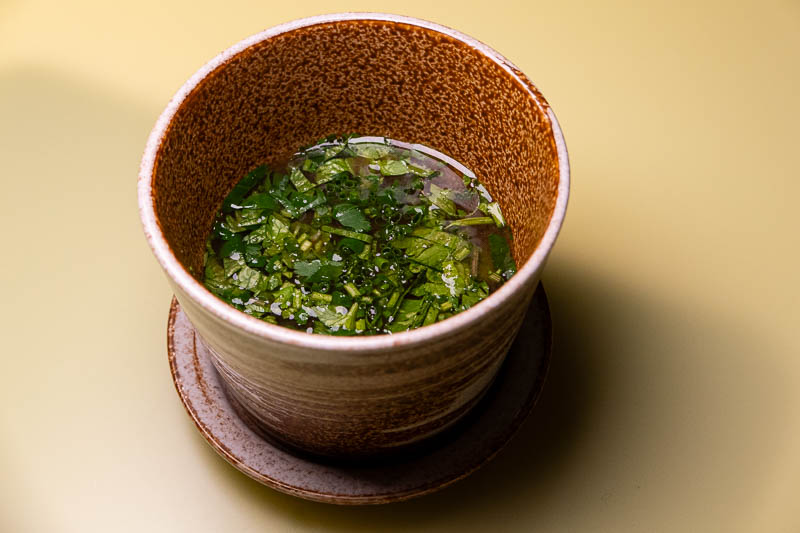
Start with the Rasam (¥24/two), a sour tamarind-tomato soup with warm spices and aromatic herbs, finished with ginger oil and tons of cilantro. Traditionally sharper, this version is gentler, clearly adjusted for broader appeal without losing its soul.
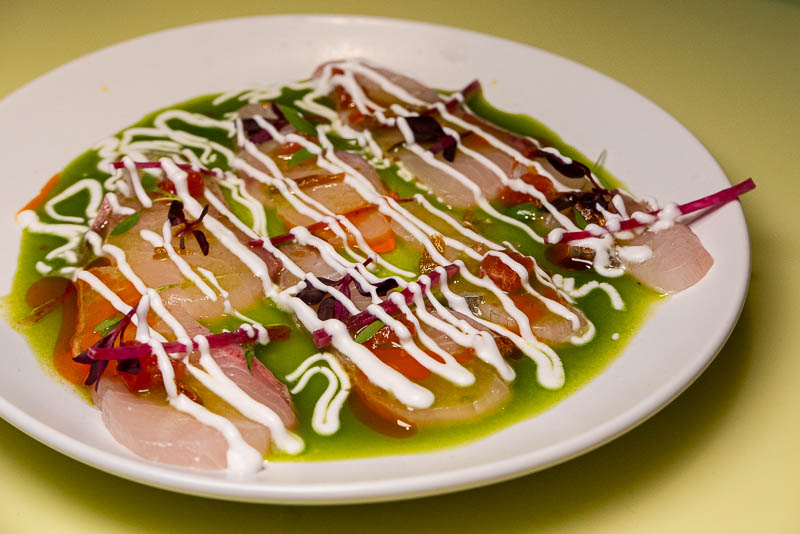
The Kinilaw (¥98) follows, featuring yellowtail sashimi cured in grapefruit juice, dressed with green chili juice, fish sauce, and lime, then topped with coconut cream. It’s grassy and coconut-forward, with a soft chili fragrance that lingers rather than bites.

One of my favorites is the Nasi Ulam (¥58), a rice salad brightened with fresh herbs and sambal, topped with ginger torch flower, crispy salted fish, fried shallots, chia seeds, and chicken skin. The latter is an uncommon but welcome addition, usually served as a whole piece of chicken rather than flavorsome bits. Mix everything well.
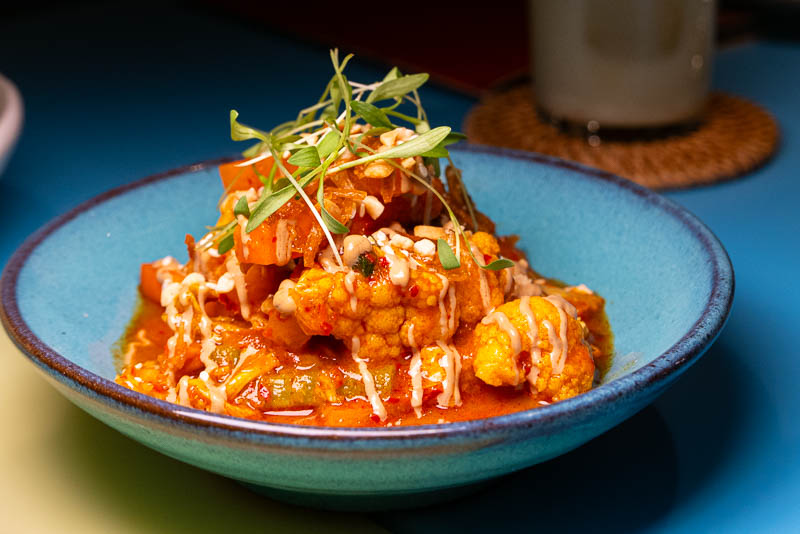
The Acar Nyonya (¥42) works as a palate cleanser between bites. This pickled relish is a Southeast Asian staple with countless regional variations, and arrives here with cucumber, cauliflower, and carrot, plus lesser-seen yuba tofu strips that add softness to the crunch.

The Soft Shell Crab (¥98) comes in the form of laksa lemak, a condensed curry sauce made with a complex mix of spices, paired with fried wonton skins and fried laksa leaves. A squeeze of lime sharpens the richness and pulls the dish together. This was fantastic.
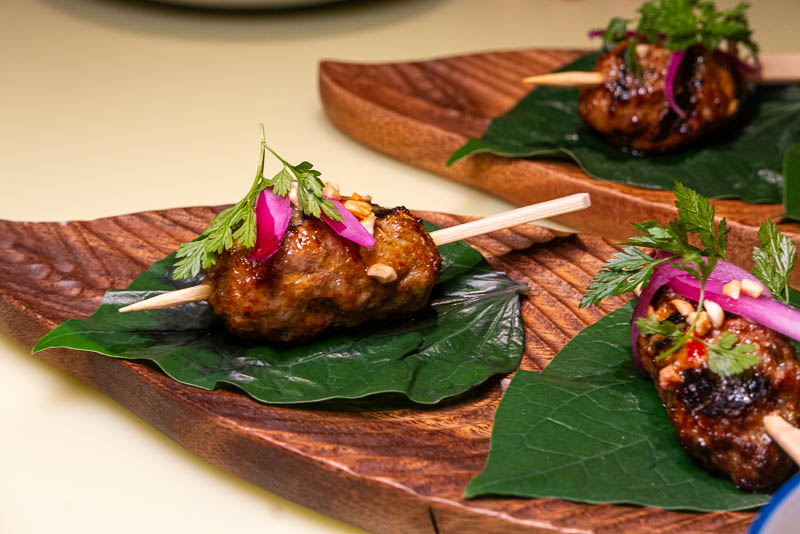
Grilled Mutton Skewers (¥48/two) are served atop betel leaf with pickled red onion and peanuts. Wrap, pull out the skewer, and brace for some punchy flavors that channel the spirit of street-side grilling. The dish takes inspiration from Vietnam’s bò lá lốt.
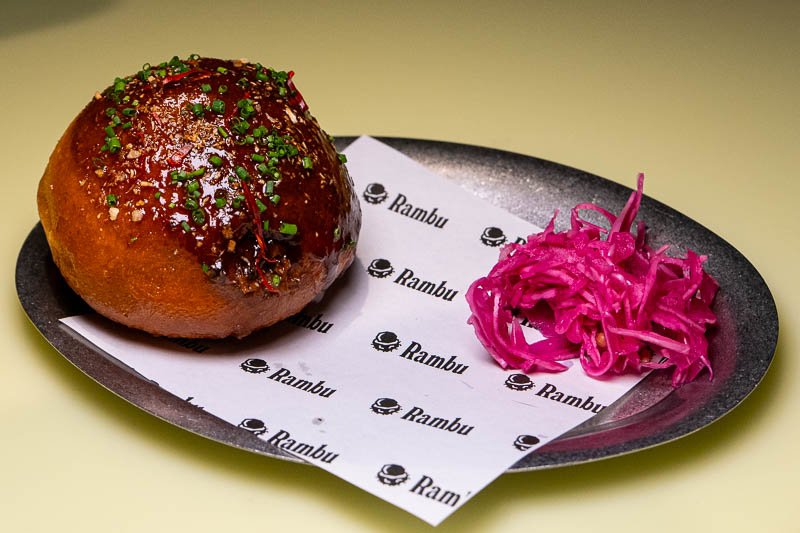
Then there’s the Rendang Donut (¥68), a dish that borders on obsession. Beef oxtail is cooked low and slow with herbs, spices, and a mole enriched with dark chocolate, then tucked into a donut brushed with Guinness and kicap manis glaze. It’s finished with kerisik (toasted coconut shavings), chives, and chili, and served alongside pickled red cabbage.
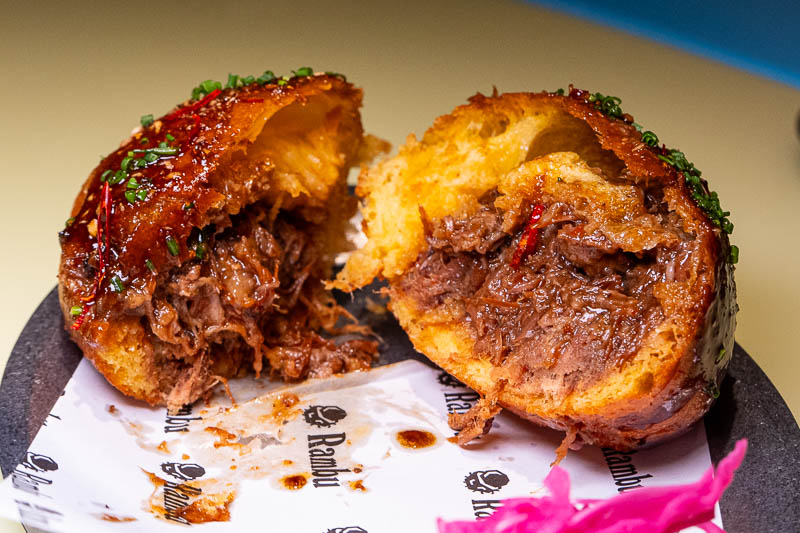
It’s a compact, bao-sized labor of love. Sharing is technically possible, but not advisable.
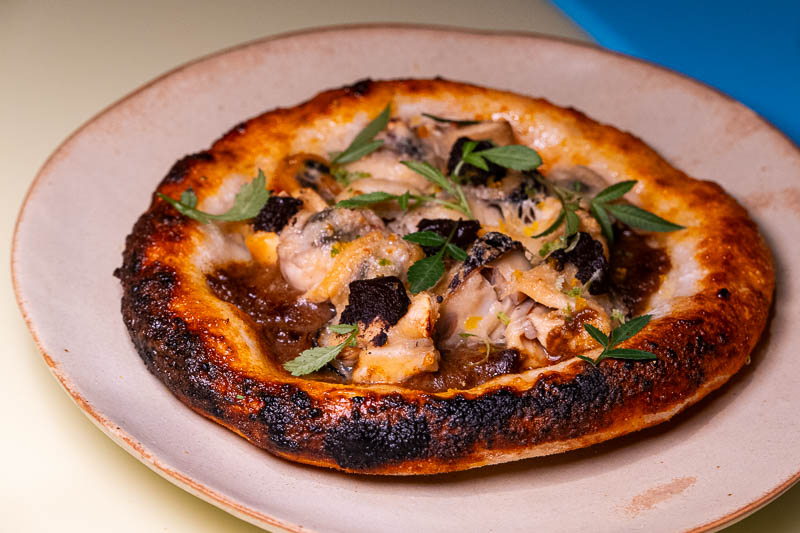
The Flat Bread (¥88) arrives with rempah butter (spiced butter), big creamy mussels, dabs of buah keluak paste and garnished with marigold. Buah keluak is a nut native to Malaysia, and has a complex flavor that’s earthy and cocoa-bitter.
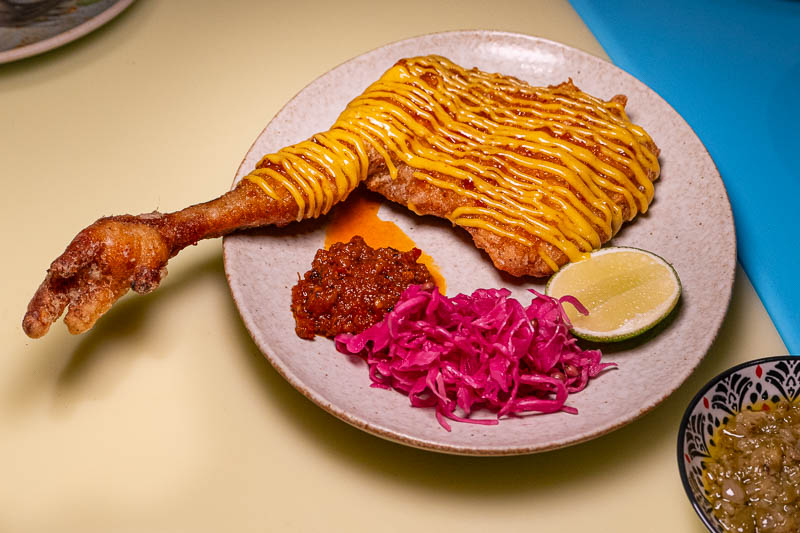
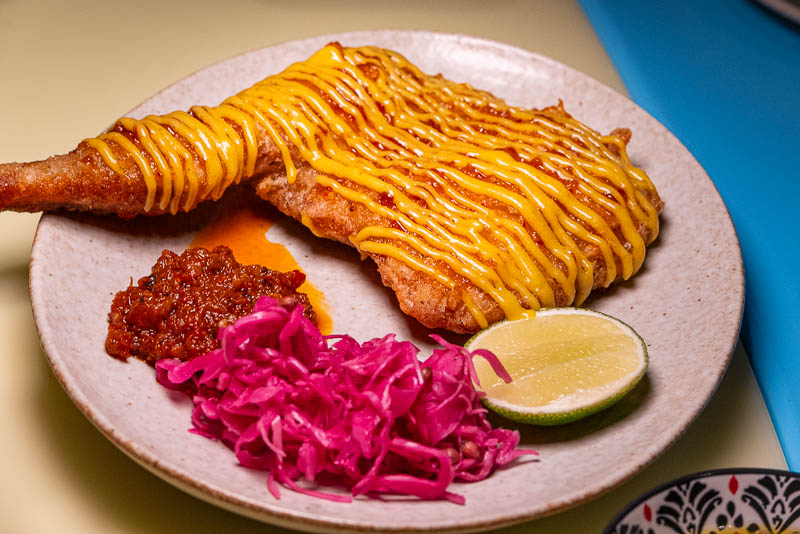
The Ayam Penyetttt!!! (¥108) lives up to its exclamation points. The Indonesian-inspired “smashed chicken” gets its shattering crisp from a tapioca starch coating, drizzled over with a turmeric aioli and served with pineapple sambal. It is flavorsome and highly enjoyable.
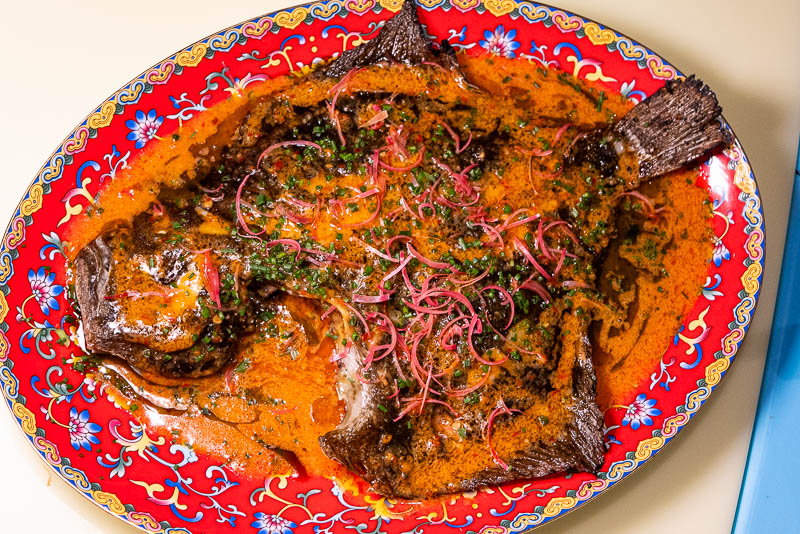
Bringing more street barbecue energy is the Ikan Bakar (¥238), a whole grilled turbot finished with sambal butter and ginger torch flower. It’s citrusy and smoky, and meant for the center of the table.
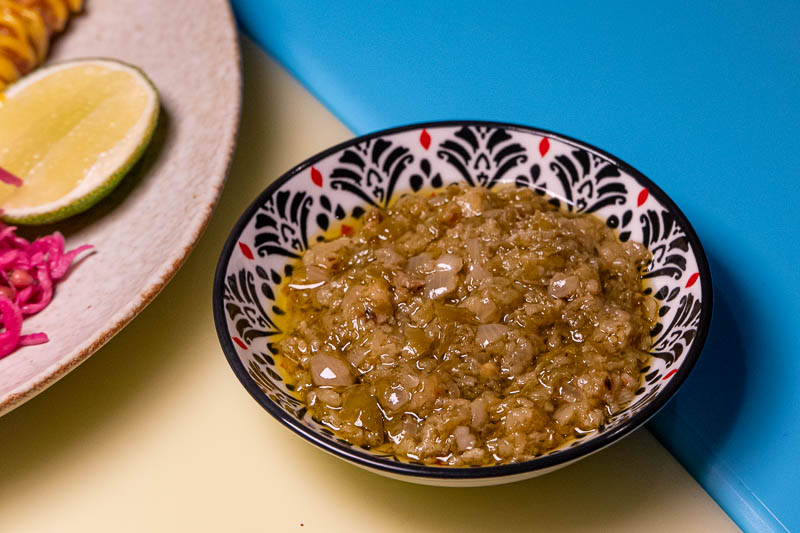
There’s also a dedicated page for rice and sambal (classic or Ijo), all priced at ¥5 each. The classic sambal is made by slowly frying red chilies and aromatics until caramelized, while Ijo (or hijau) uses green chilies and leans more tangy and grassy.
Desserts
Dessert is a tight lineup of three, and choosing just one makes for a huge dilemma.
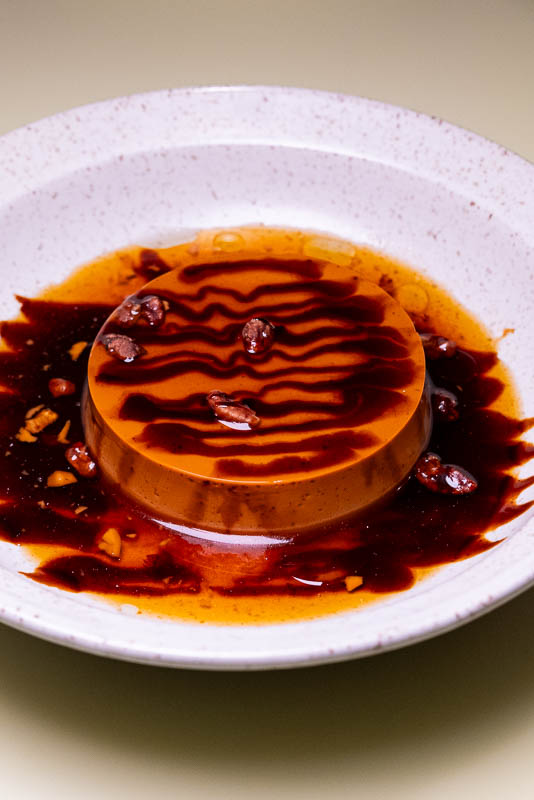
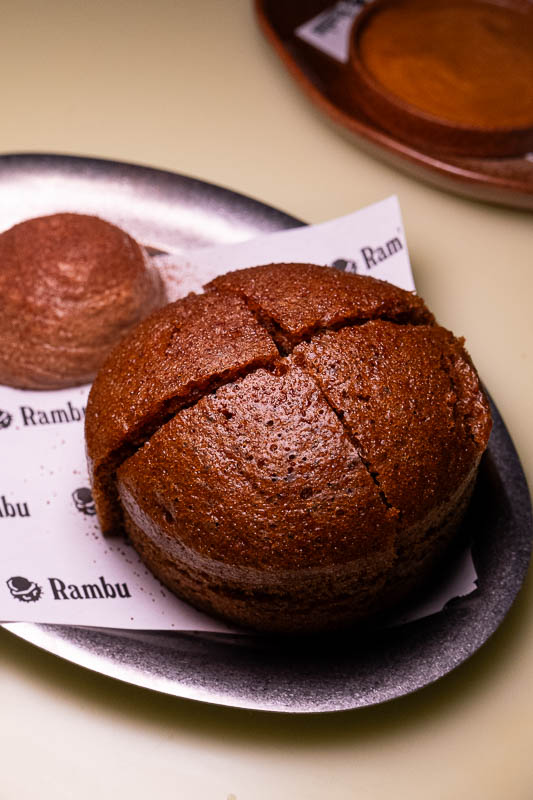
The Thai Creme Caramel (¥58) delivers full Thai tea flavor, topped with pecans and a grilled watermelon and calamansi reduction that lightens each bite. The Ginger Ma Lai Gao (¥42) sits somewhere between sticky toffee pudding and sponge cake, paired with a Milo-and-Diplomat foam. Originating in Malaysia and later embraced by Cantonese dim sum, it feels right at home here.
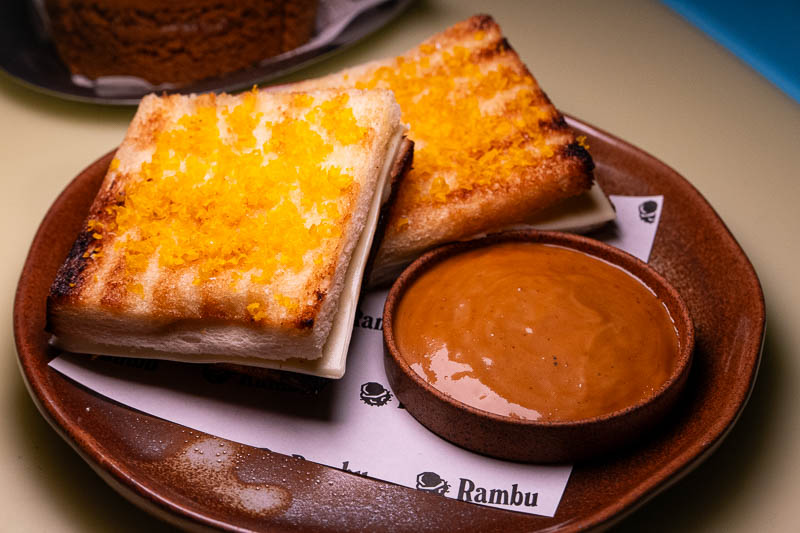
Finally, the Kaya Toast (¥42) reimagines the breakfast staple. Homemade kaya is sandwiched neatly with ice-cold butter, topped with salted egg yolk, and served with a rich egg-and-soy cream that adds depth and playfulness.
Closing Thoughts
You don’t need to know the lineage of every dish to enjoy a meal at Rambu, but I believe their menu can benefit from a glossary of terms for those unfamiliar with foods like sambal and buah keluak.
For those fluent in the flavors of Southeast Asia, it offers something familiar yet refreshed. Kudos to team Rambu for this glorious new take on Southeast Asia!